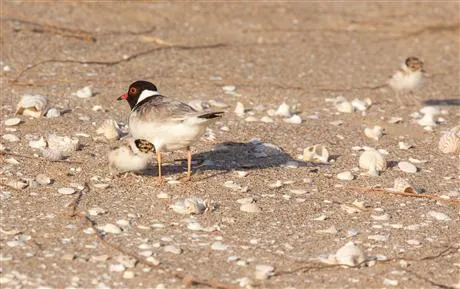
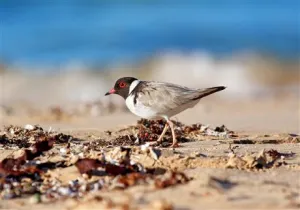
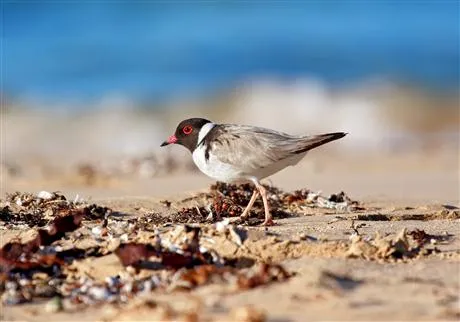
The Hooded Plover, is a small black, white and red bird which lives and breeds on the beach. From September to April our surf beaches become breeding sites for these endangered birds.
About the Hooded Plover
This means, come breeding season in the warmer months, the Hoodies face some of their greatest dangers from beachgoers.
As the days lengthen, the Hooded Plover (or Hoodie) starts to think about making a family. It’s not an easy feat for a bird that lays its eggs in a scrape on the beach and then must lead its tiny, camouflaged chicks down to the water's edge to feed for the five weeks until they can fly. Hooded Plover chicks must feed themselves from birth.
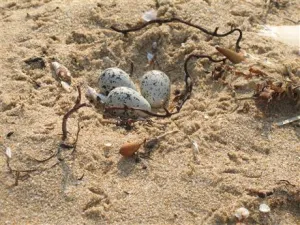
An adult pair of Hooded Plovers will lay up to three eggs in a scrape in the sand and incubate them for four weeks until the eggs hatch. The chicks can’t fly until they are five weeks old and must forage for their own food up and down the beach and along the water's edge, avoiding the beachgoers, their dogs and predators. Chicks can move up to one kilometre along the beach to feed.
Survival has become nearly impossible on beaches with Australia’s current human population, given it’s an Aussie essential to love the sun, sand and surf.
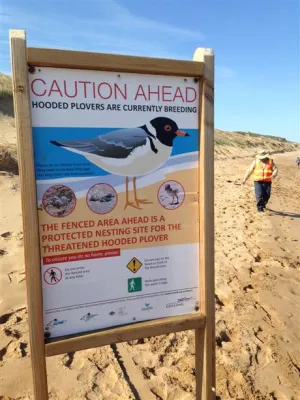
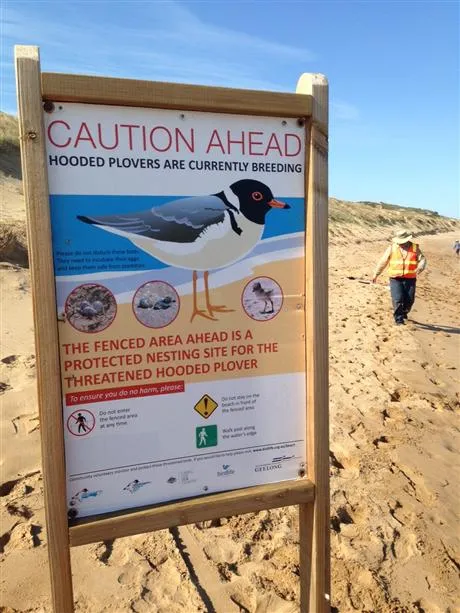
Birds and people don't need to compete though, as researchers have found a way for this endangered bird to safely raise its young. A simple formula of alerting beach users with signs and temporary fencing, putting out wooden shelters for chicks to hide in and requesting dogs be on a lead, is enough to tip the balance and give these birds a 55 per cent chance of having their family survive instead of a measly two per cent chance.
Dogs and cats are seen as predators of the species, just as foxes, ravens and other birds of prey are, and for this reason the City, along with Birdlife Australia, have put measures in place to protect the birds.
Hooded Plovers are a rarity along the Great Ocean Road and so the Bellarine Peninsula is the last major population of the birds until Warrnambool, making it a high priority at a national scale.
This is why to help protect the Hoodie, dog control regulations are dogs on lead at all times from Collendina to Point Lonsdale.
Protection status
The Hooded Plover is protected under the Victorian Flora and Fauna Guarantee Act 1988 and the federal Environment Protection and Biodiversity Conservation Act 1999.
How you can help
So what does this mean for you?
- Observe dog regulation signage
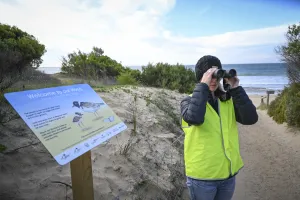
Dog owners will notice that the signs change along the beaches of Point Lonsdale, Ocean Grove and Breamlea. There can be additional signage or beach closures when Hoodies are nesting and raising chicks. Please follow signage that is in place and observe any fencing and area closures. Keeping your dog on lead when at the beach makes a big difference for this little bird when they are breeding and rearing their young, generally between August through to end of March.Local Laws officers patrol these areas to ensure dogs are on leads at all times.
- Volunteering
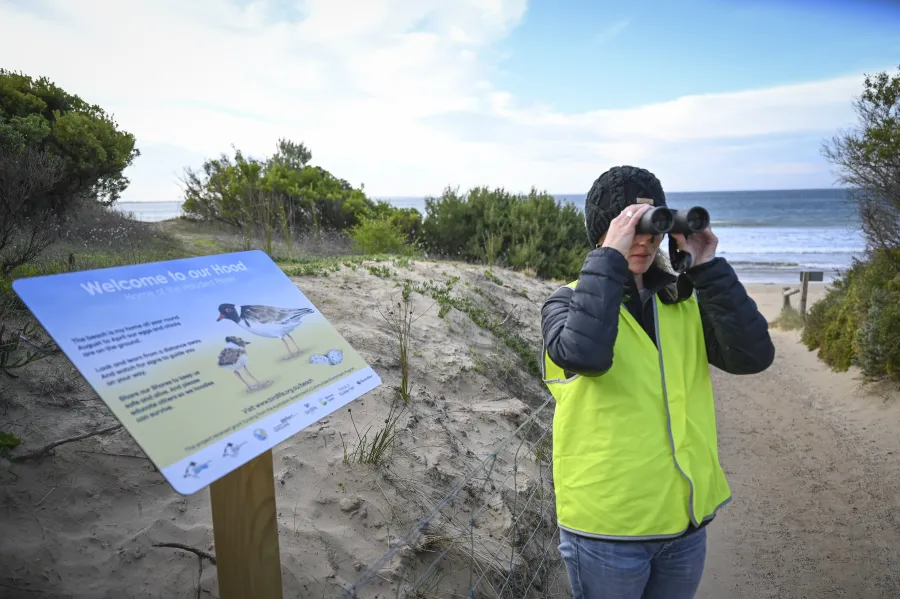
Volunteers are needed to help monitor the birds and chicks, report when the birds are nesting, and talk to beach users about the birds and the threats that they face. To find out more about becoming a volunteer, please contact BirdLife Australia on 03 9347 0757 or email [email protected]
Don't confuse your plovers
Most importantly – Hooded Plovers are not Spur Winged Plovers. Hoodies are shy, non-aggressive beach-nesting birds that do not swoop.
Need to know more...
For further information on the Hooded Plover visit the Birdlife Australia website.
Click on an image to view details and enlarge
hpcap-Plover.jpg 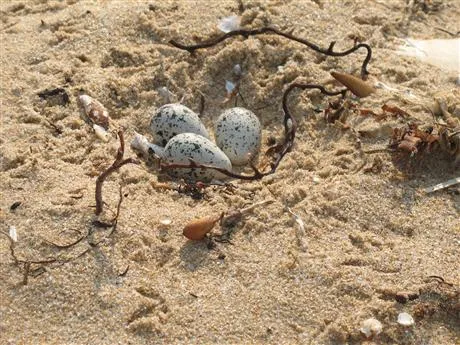
Click on an image to view details and enlarge
Page last updated: