Social Housing Plan - The prevalence of housing stress in Geelong
Estimated number of households experiencing stress
Housing stress is used as an approximate measure for the number of households that would benefit from living in social housing. Housing stress is defined as occurring where very low, low- and moderate-income households are experiencing housing stress as a result of paying a significant proportion of income in rent or mortgage payments, nominally more than 30 percent.
Housing stress is thus a function of the level of income, and the cost of housing. The cost of housing is measured as rental or mortgage payments. Income bands are set by the Victorian Government for Greater Melbourne and Regional Victoria. Geelong is classified as belonging to Regional Victoria. Using income bands for Regional Victoria has the effect of underestimating the number of low-income households.
Table 7: Geelong households in housing stress - 2016
| Level of Income | Mortgage Stress | Rental Stress | Total Housing Stress |
|---|---|---|---|
| Very low | 783 | 2,138 | 2,921 |
| Low | 955 | 2,851 | 3,806 |
| Moderate | 1,332 | 1,822 | 3,154 |
| Total | 3,070 | 6,811 | 9,881 |
Source: ABS, 2016
There are approximately 9,900 households (11 percent of all households) living in housing stress in Geelong. There are approximately 6,800 households experiencing rental stress, which is approximately one quarter (26 percent ) of all households renting privately in Geelong.
Households living in housing stress are located in 3 main Areas:
- Area 13: Corio, Norlane (19 percent of Area households)
- Area 6: Newcomb, South Geelong, St Albans, and Whittington (16 percent ) and
- Area 8: Belmont and Highton (11 percent )
The rental and mortgage components of housing stress are below for each of the 15 Areas.
Housing stress associated with rental is more significant than housing stress associated with mortgage repayments in all Areas except Area 1 which includes Armstrong Creek, and Area 15 Lovely Banks and Rural North.
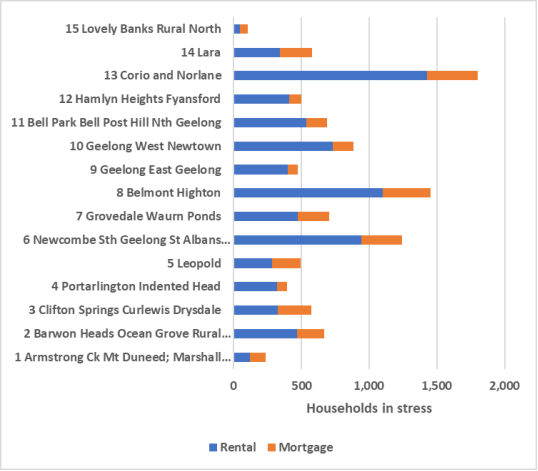
Figure 7: Households in Rental and Mortgage Stress – 2016
Source: ABS, 2016
Rental stress
Households experiencing rental stress are generally considered to be more at risk of homelessness than households experiencing mortgage stress, for the following reasons:
- Households that rent privately are at risk of eviction for non-payment of rent, as well as other issues, and are at risk of rent increases at the discretion of the landlord, as well as adverse actions by landlords.
- Households with a mortgage have greater tenure security, are subject to interest rate movements, and may be able to realise capital from the equity in their property if ever forced to sell. Once in the rental market, they may no longer experience housing stress.
For these reasons, rental stress is used in the calculation of demand for social housing. Social housing is provided to people who are renting, on low incomes, and who are paying a relatively high proportion of their income as rent. Many such households are in receipt of government income support.
Recent trends in housing rental stress
The proportion of households living in rental stress in Geelong has increased overall by 3 percent , from 30 percent in 2011 to 33 percent in 2016. Some areas such as Corio and Norlane have experienced a greater increase (7 percent ), and some have experienced a small reduction. These changes need to be considered in the context of a 20 percent increase in the number of households renting privately 2011 - 2016.
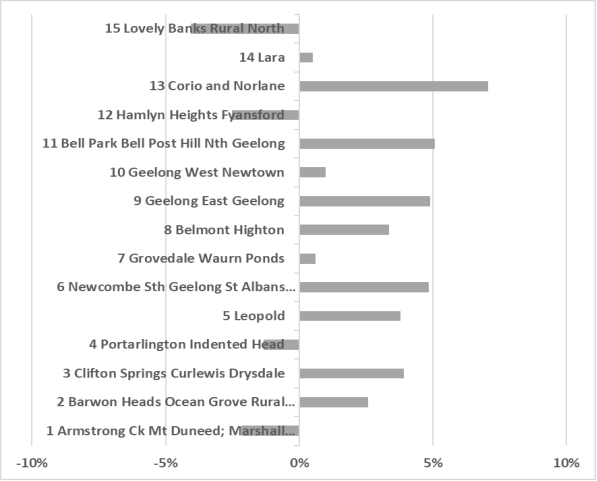
Figure 8: Households Experiencing Rental Stress – Percentage change 2011 - 2016
Source: ABS, 2011 and 2016
Number of homeless in Geelong?
The total number of homeless people in Geelong was approximately 700 on census night, with a further 431 marginally housed. Table 6 shows the various categories of homelessness. Major reasons for homelessness include housing crisis, financial difficulties, relationship breakdown, and escaping family violence [6].
Homeless Persons by Type of Homelessness – 2016
| Homeless circumstances on census night | Number |
|---|---|
| Living in improvised dwellings, tents, or sleeping out | 67 |
| Living in supported accommodation for the homeless | 252 |
| Staying temporarily with other households | 121 |
| Living in boarding houses | 113 |
| Living in other temporary lodgings | 0 |
| Living in 'severely' crowded dwellings | 157 |
| Total | 712 |
| Marginally housed on census night | |
| Living in other crowded dwellings | 315 |
| Living in other improvised dwellings | 6 |
| Marginally housed in caravan parks | 110 |
Source: ABS Census 2016
The above estimates of people experiencing homelessness are conservative, and underestimate the true number of people experiencing homelessness on census night. In particular, the data underestimates the number of women and children escaping family violence who are seeking assistance with housing.
The ABS notes that some women and children escaping family violence may be identified as ‘visitors’ to another home on Census night. They may not wish to disclose their circumstances out of fear, or stigma, or they may have an expectation that they can return to their home in the future [7].
Other homelessness data supports the view that the above estimate is conservative. For example, there were approximately 5,000 homeless clients in the Barwon Region in 2017/18. [8].
For the purposes of estimating demand for social housing, we include 1,000 households [9].