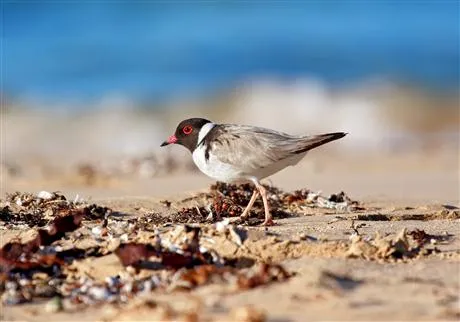
Five Hooded Plover chicks fledge in successful breeding season

This season’s fledglings were recorded at Buckley Park Foreshore Reserve and Breamlea, and a surprise chick discovered on Sand Island, marking one of the strongest seasons in recent years.
Hooded Plovers – or “hoodies” – nest directly on the sand and their chicks are extremely vulnerable from the moment they hatch. With only around 750 birds left in Victoria and chicks having just a 2 per cent chance of surviving to fledgling age, every successful outcome is critical.
The City’s Environment and Animal Management teams worked closely with Barwon Coast and Friends of the Hooded Plover volunteers at Buckley Park Foreshore Reserve, increasing monitoring, visitor education and on-ground support throughout the season. Community behaviour also played a major role, with more people keeping dogs on lead, walking at the water’s edge and respecting temporary protection zones.
Greater Geelong Mayor Stretch Kontelj OAM
This is a fantastic outcome for one of our most vulnerable coastal species that has incredibly low survival odds.
BirdLife Australia Friends of the Hooded Plover volunteers, City officers and Barwon Coast staff have all done outstanding work, but it’s the community’s support – especially keeping dogs on lead – that has truly made the difference this season.
Friends of the Hooded Plover regional coordinator Tash Verspeek
It’s really important and very exciting that we've managed to help support the hoodies in their breeding success.
There are lots of threats to hooded plovers, but on a stretch of beach that allows dogs, what we are asking people to do is to keep their dog on a lead. We’re very happy to say that most people were obliging and supportive, so thank you.
It’s probably our biggest win for the hoodies this season to have had an increase in the collaborative approach with the City of Greater Geelong.
Long-time volunteer John Murray, who has monitored a stretch of the Bellarine coastline for two decades, said the fledglings represent a major boost to the local and statewide population.
Friends of the Hooded Plover volunteer John Murray
This breeding season there were 21 nests between Ocean Grove Pub and Point Lonsdale, and out of those we had four chicks that successfully made it through the 35 days until they’re mature enough to fly.
It's quite astonishing to watch how they communicate. They're really sharp, switched-on birds and they know their environment inside out after millions of years of living on the beaches.
Hooded Plover chicks spend their first five weeks on the sand, relying on signals from their parents to warn them of danger. They face constant threats from birds of prey, magpies, crows, gulls, foxes and unleashed dogs, making this early period extremely high risk.
Parent Hooded Plovers use a dramatic ‘broken wing’ display to feign injury and distract predator threats away from eggs and flightless chicks.
The City will continue to work with volunteers and the community to protect Hooded Plovers ahead of the next breeding season, which begins in August.