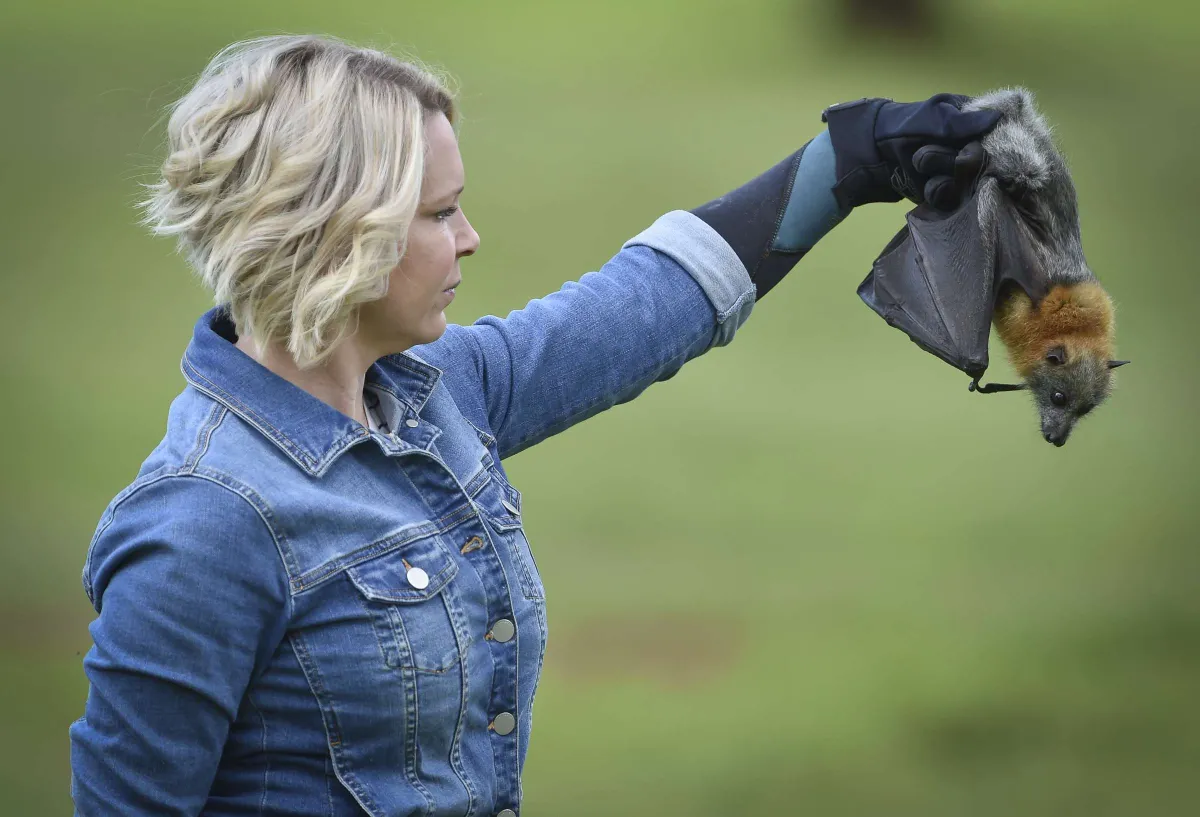
Up to 25,000 flying foxes nest in Eastern Park, however their overall population is declining. This is because they’re susceptible to extreme heat as well as habitat loss, and entanglement in man-made objects such as powerlines, fruit netting and barbed wire.
To help track changes in the flying foxes’ environment, we’ve installed climate sensors in five radiata pine trees to monitor temperature and humidity patterns in the foxes’ nesting sites.
We’ve invested $17,000 to connect water supplies to the flying fox colony and further funding from the Victorian Government could see sprinklers installed next year.
The automated sprinklers can be linked to the climate sensors to help cool down foxes during dangerous summer heat waves.
Friends of Bats and Bushcare respond to each heat stress event at the colony by establishing a triage team to keep sick foxes hydrated.
Veterinary nurse and volunteer wildlife carer, Leila Moody, said there are flying fox colonies at Eastern Park, Yarra Bend, Werribee, Colac and Warrnambool.
“They're one of our most misunderstood animals because they play a huge role in dispersing seeds and pollinating trees such as Eucalypts," Leila said.
“Currently we have pups coming into care because they lose their Mum to heat stress. Having sprinklers will help build up the population and create less work for wildlife carers.”
Veterinary nurse and wildlife carer, Jarrah Wadsworth said plans are also underway to install thermal imaging cameras to understand how climate change is impacting the foxes’ behaviour.
“They’re as cute as anything when you see them up close. We call them sky puppies because they have a little puppy dog face,” Jarrah said.
“I can’t thank the City enough because they’ve been so proactive in looking after the bats and supporting the work we’re doing.”
What can you do?
Flying foxes can become trapped in fruit trees draped with netting, so please use shadecloth that’s wildlife-friendly when protecting fruit in your backyard.
View temperature and humidity monitoring for the flying fox colony