Protect our precious Hooded Plovers this summer
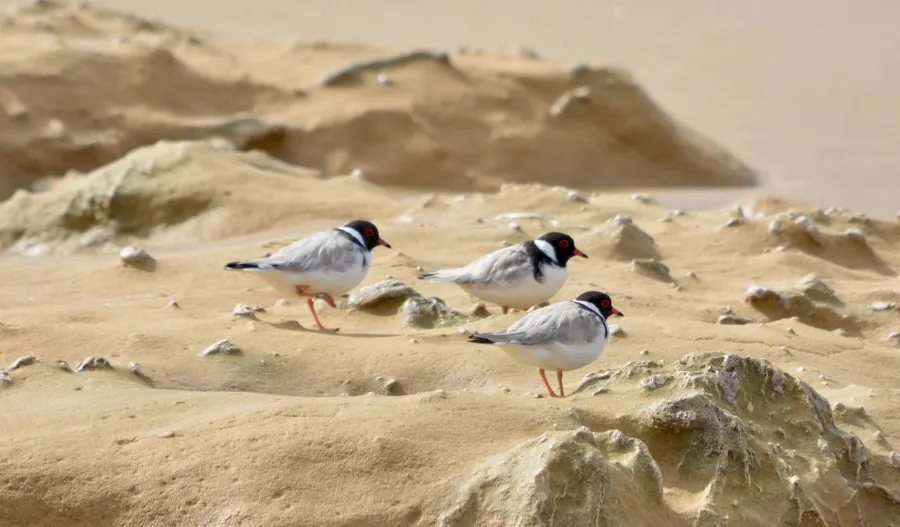
This summer BirdLife Australia volunteers are back on our beaches to protect one of our most vulnerable coastal birds – the Hooded Plover affectionately known as the “Hoodie”.
Not to be confused with the larger common Masked Lapwings these shorebirds have a striking black ‘hood’ and stand just 10 cm tall. They nest on the sand during busy summer months making them easily disturbed by people dogs and even the weather.
With only around 750 hoodies left in Victoria every chick matters.
Last year one tiny chick successfully fledged at Ocean Grove Beach – a huge achievement considering hoodie chicks have just a two per cent chance of survival. The survival rate can rise to 50 per cent with help from volunteers protective fencing signage and community support.
Each hoodie pair occupies a distinct stretch of beach and often returns to the same nesting site year after year. They lay their eggs in a shallow scrape above the high tide mark where they are difficult to spot camouflaged among seaweed and driftwood.
The Birdlife Australia Hooded Plover recovery program began in 2006 when only about 500 hoodies were left in Victoria and their numbers were falling fast. Hoodies are now breeding more successfully thanks to dedicated volunteers who track nests and monitor chicks.
What you can do:
- walk dogs on a lead
- follow beach signs and fencing
- walk by the water’s edge to avoid nests
- give space to breeding pairs and chicks.
Mayor Stretch Kontelj OAM
Our beaches are home to many species of wildlife that are an important part of our environment.We share our beaches with Hooded Plovers and we want to support our local volunteers in protecting these coastal birds.
Environment and Circular Economy portfolio chair Councillor Elise Wilkinson
It’s easy to help keep our beaches safe for Hooded Plovers – walk your dog on a leash follow the signs and give nesting birds plenty of space.Protecting these vulnerable birds will keep our beaches wild and wonderful for future generations.
Friends of the Hooded Plover volunteer regional coordinator Tash Verspeek
The main way that we can all help the Hooded Plover have success is when you're approaching the beach take a look around and see if there's any messaging or signage that might indicate a nest up ahead.Keep your dog on a lead and walk by the water's edge until you're past the nesting area.