H5N1 avian influenza has been detected in Greater Geelong. Our teams have been closely monitoring the emerging situation, and we will continue to monitor developments, support agency-led response efforts, and keep our community informed.
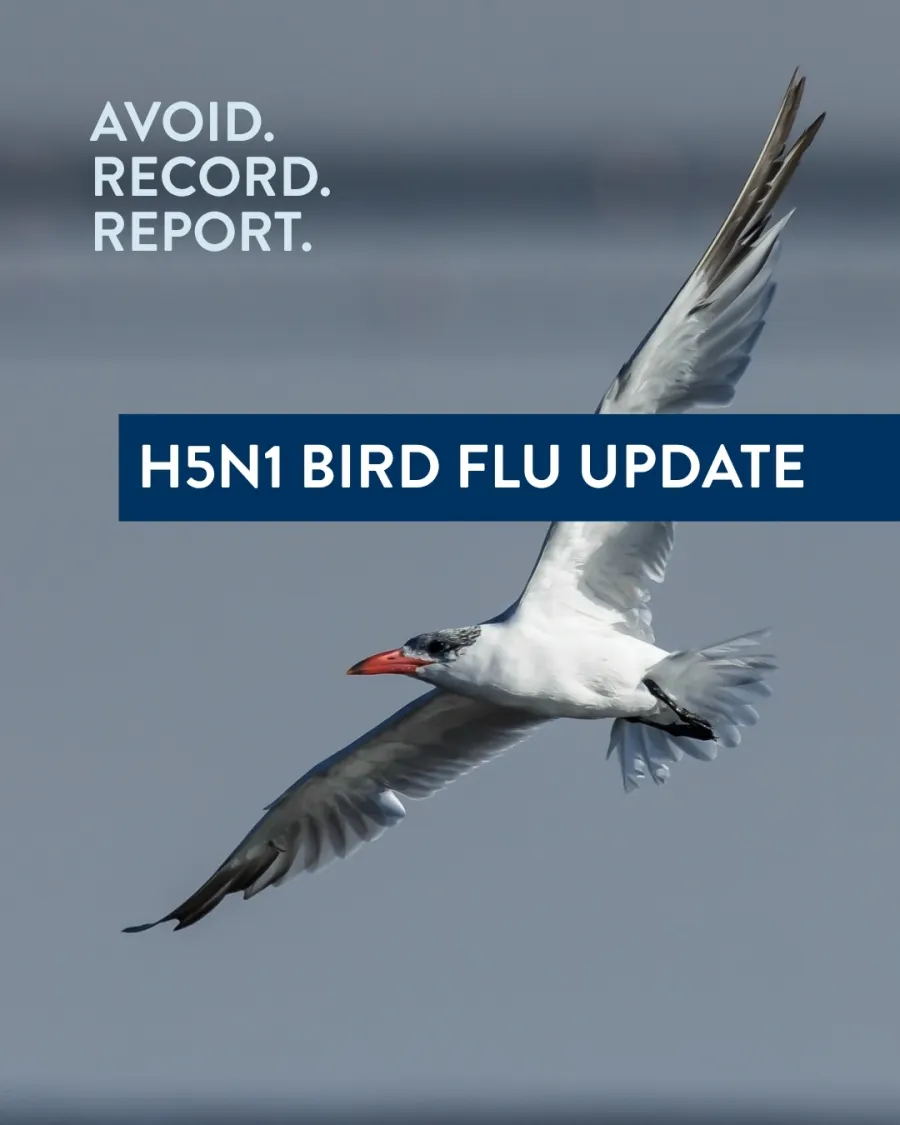
The most important thing you can do is to avoid, record and report.
People must refrain from touching or picking up any birds - they should be left where they are, recorded, and reported.
If you see sick or dead wildlife:
Avoid
Contact with sick or dead birds, wildlife or their environment.
Record
What you see.
The location.
Capture photos or videos if it is safe to do so.
Report
Clusters of five or more sick or dead wild birds of any species.
A single sick or dead seabird, waterbird, shorebird, bird of prey or marine mammal such as a seal, sea lion or dolphin.
Reports can be made through the Agriculture Victoria online or by calling the Emergency Animal Disease Hotline on 1800 675 888
Report sick/dead birds or wildlife to Agriculture Victoria
Pets and H5N1
There are simple steps you can take to keep your companion animals safe.
For dog owners, ensure that you keep your dog on a lead, and don't allow them to approach or interact with wild birds, whether dead or alive. Avoid areas where large numbers of wild birds are congregating. Contact your veterinarian if your dog becomes unwell after contact with wild birds.
For cat owners, if your cat is not contained at home, now is a good time to consider an indoor lifestyle, as keeping cats contained can protect them from a range of risks, including contact with potentially infected wildlife.
You should also wash your hands after handling pets or visiting areas frequented by birds.
Useful information from Agriculture Victoria
Page last updated:
We are glad that you find this page helpful!
Submitting feedback... Please wait.
An error occured! Please try again.
Feedback submitted successfully!
Thank you for your feedback. We value your input and will use it to improve our services.