Help protect the trail and valuable vegetation so it can continue to be enjoyed by the community and future generations.
Historical Geelong–Queenscliff Railway Line - Bellarine Rail Trail marker signs
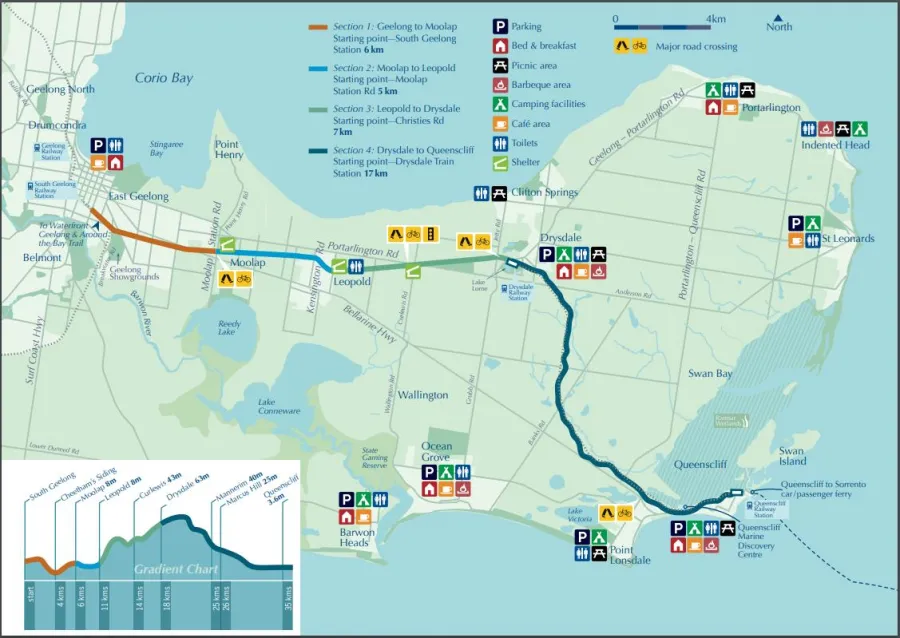
As part of trail revitalisation works in 2026, the historical marker signs along the trail were removed. The information from those signs has been preserved on this webpage so the community can continue to access and enjoy the stories and history they shared.
The Melbourne to Geelong rail line was well established with the extension line between Geelong to Colac providing a junction planned at South Geelong.
Construction began on the Geelong–Queenscliff Railway Line at South Geelong and Queenscliff 27-28 August 1878, with the last rail placed 3 May 1879. The official opening celebration was 21 May 1879 in Queenscliff, and by 1885 four passenger services ran per day in each direction.
The first interim station was Drysdale, and by 1883 services could stop at Moolap, Kensington Flat (aka Leopold), Ocean Grove (Marcus Hill). By 1914 a platform at Curlewis opened, and then Mannerin - Suma Park.
Moolap Station
A station consisting of a wooden passenger platform was erected at Moolap and opened on 1st August 1881. A small shelter shed/ office was added in 1887.
Passenger traffic was generated by the nearby salt works. A bar locked loop siding and goods ramp were provided on the up side of the line on 26th June 1890. A Station Porter worked this station until 1893, when it became ‘no one in change’. The goods siding did little business and was removed on 23rd April, 1900. Moolap was opened as a block post on August 29th, 1908 for the U.S Navy Fleet visit. After WW1, Moolap generated very little traffic, and was a ‘flagstop’ in its later years. The platform was abolished on 10th March, 1936. Improved roads and its close proximity to Geelong caused Moolap’s early closure.
Leopold Station
The station at Leopold was originally named Kensington Flat. A timber platform was provided here on 1st August 1881 adjacent to Melaluka Road. The station was renamed Leopold during 1886 following pressure from the Postal Department as there was confusion owing to the fact that a Kensington already existed near Melbourne.
Loading of agricultural products forming the bulk of outwards goods, and the usual domestic needs of coal, firewood and machinery being the sum total of the inwards. In 1893, the Station Porter was withdrawn and the station worked under ‘no-one in charge’ conditions. The siding was extended by 130 feet on 24th July 1924. Leopold was closed to ‘less than wagon load’ traffic on March 2nd, 1943. The station building was destroyed during a violent storm in 1948. The siding received little use after 1950 and was removed on 28th September 1960.
Curlewis Station
The station at Curlewis was opened on 23rd January 1914. Like most of the stations along the Queenscliff branch, Curlewis had a peaceful existence for most of its life. Market gardens in the Wallington & Fenwick districts dispatched produce in reasonably large amounts up to WW2. A small settlement once existed at Curlewis in the general vicinity of the station including a church, catholic school and the Christies Union Hotel. Today the St Francis Xavier Church remains as a reminder of this ‘township’.
As business was very light, by the mid 1950’s the siding and goods platform were abolished on 7th October 1960 and the station closed to all traffic on 23rd January 1961.
Much of the railway line has been removed between South Geelong and Drysdale, however, the section from Drysdale to Queenscliff is still used by the Bellarine Steam Preservation Society as a tourist railway.
Our Environment
Victoria’s Native Grasslands are considered some of the most modified ecosystems in the world, with 99% cleared or modified for agriculture, industry and towns. The remnants of these form part of Victoria Volcanic Plain Ecosystem. On the Bellarine Peninsula we have isolated pockets that provide a snapshot of the open Grassy Woodlands vegetation communities that were once widespread. These occur on private land and along the Bellarine Rail Trail and support a wealth of Biodiversity.
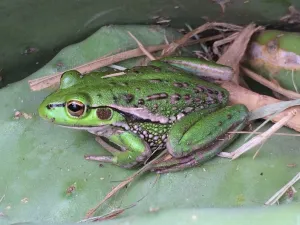
Wildlife corridors have been created that link the Bellarine Rail Trail to Yarram Creek and down Swan Bay. This provides habitat for birds and animals to move along including threatened species like the Orange-bellied Parrot and Growling Grass Frog.
Community groups such as the Friends of the Bellarine Rail Trail and Bellarine Landcare group play a vital role in helping to protect and enhance the natural values of the Trail, while the Swan Bay Environment Association have been active in revegetating important Coastal Salt marsh shoreline vital to the Orange-bellied Parrot and migratory water birds.
The Friends of the Bellarine Rail Trail have revegetated areas including Moolap Station Road, between Christies Road and Kensington Road, Curlewis and the Avenue of Honor.
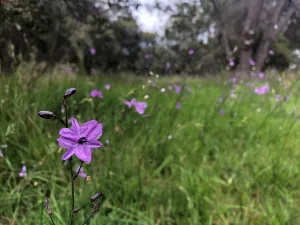
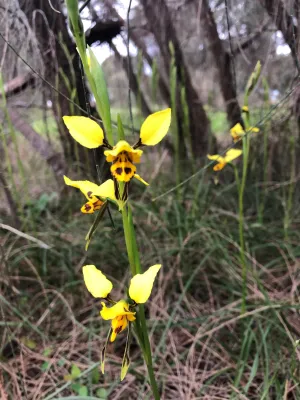
The Leopold Orchid, Chocolate Lily and Dianella Revoluta are an example of vegetation that is native to the Bellarine Peninsula.
The vegetation along the Bellarine Rail Trail is an important part of what makes this trail special. These plants provide habitat and food for local wildlife, including birds, insects and small animals. By staying on the path, respecting planted areas and sharing the trail responsibly, users help protect this valuable vegetation so it can continue to be enjoyed by the community and future generations.
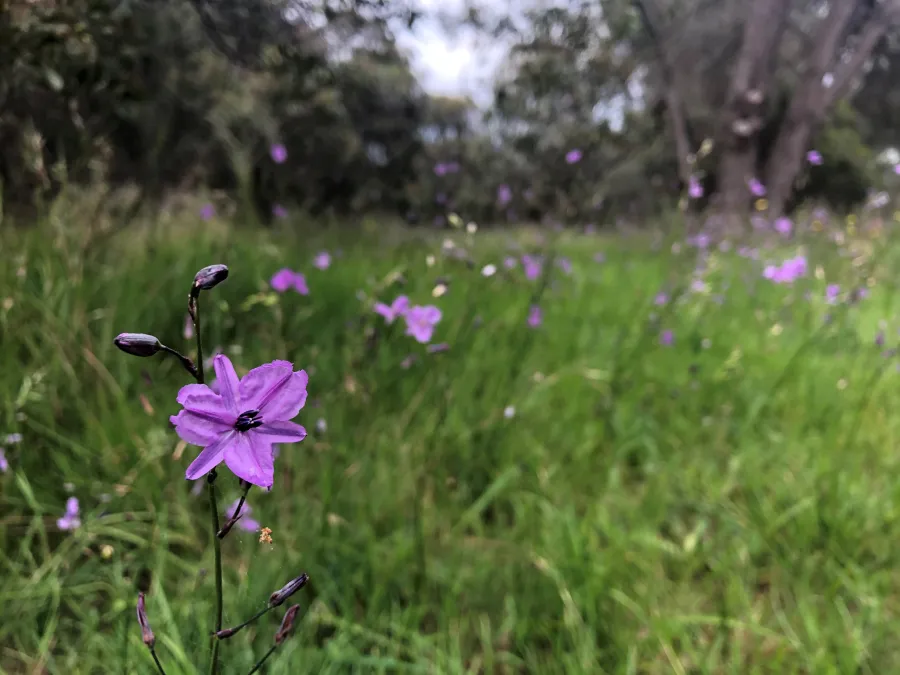
Bellarine Rail Trail Chocolate Lily 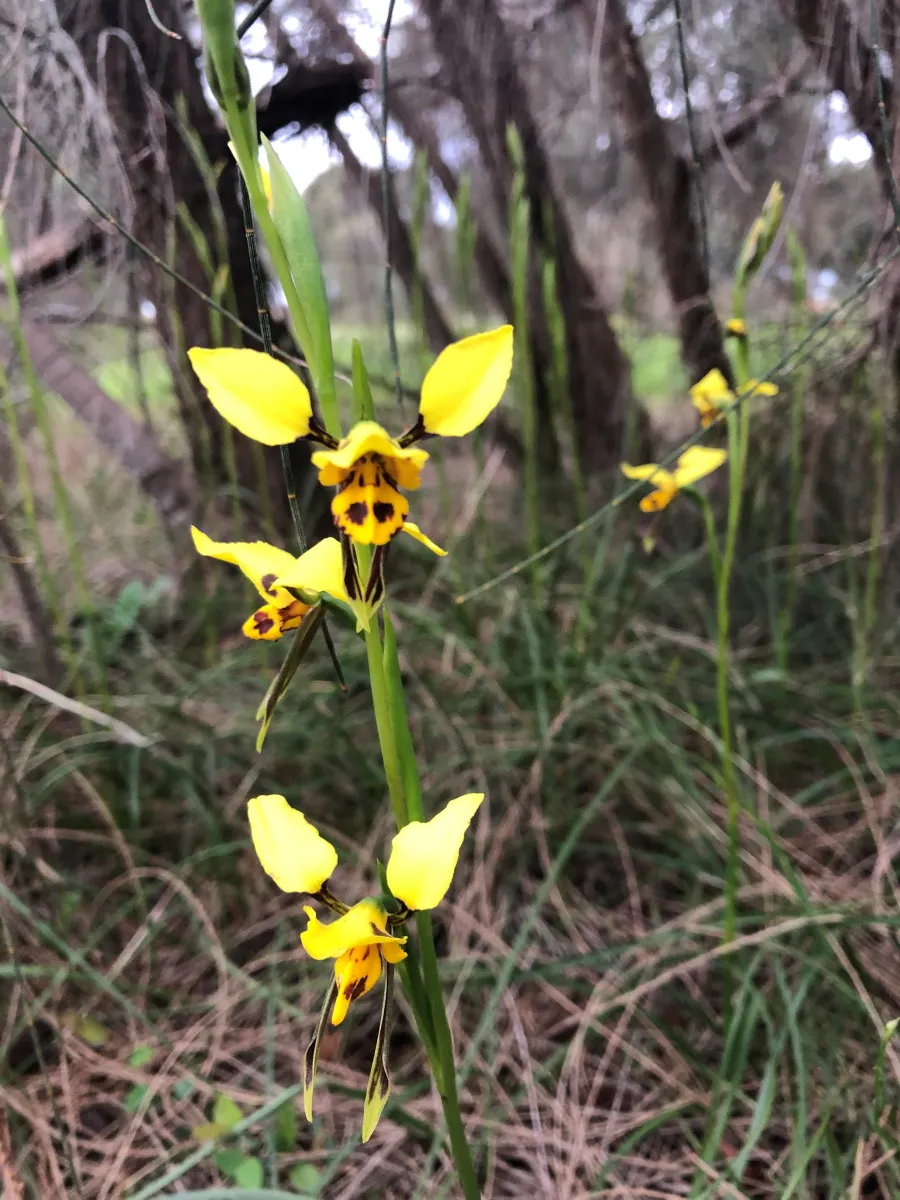
Bellarine Rail Trail Orchid 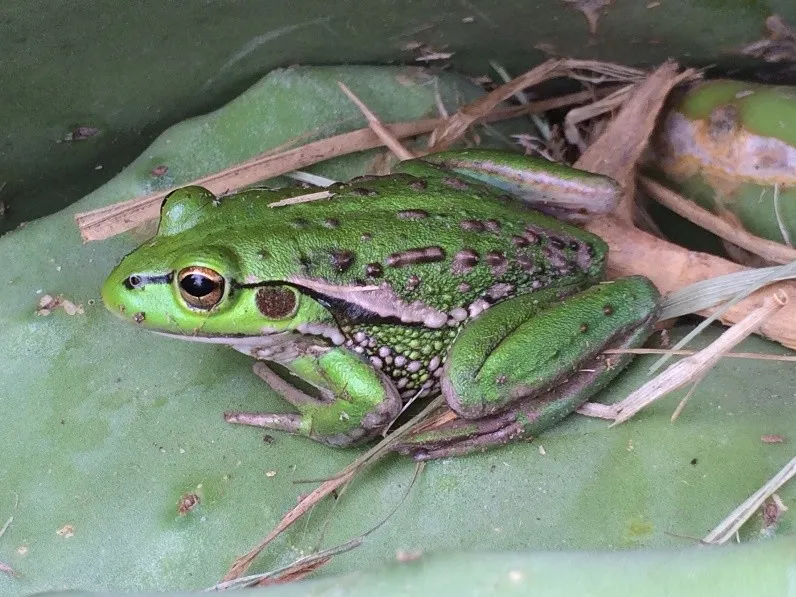
Growling Grass Frog
Click on an image to view details and enlarge
Page last updated: