Training your dog is an important step to becoming a responsible pet owner and if done correctly, should make life better for you, your dog and the wider community.
When to start training
If you have a puppy, enrol in puppy school classes, which not only teach basic commands, but are essential to the socialisation of the puppy. Puppies have a 'critical socialisation period' from about 3-17 weeks of age, during which time the puppy should be exposed to but not flooded with, everyday situations.
If you rehome an adult dog, training can commence as soon as you have established a bond with that dog and it trusts and recognises you as the owner. If problem behaviours are exhibited, have the dog checked by a vet to rule out any underlying medical problem before commencing training.
Finding a trainer
In Australia, there are currently no requirements or standards that people must meet in order to advertise themselves as dog trainers, so be vigilant when selecting a trainer.
- Ask around for referrals and only consider trainers that use reward-based training methods.
- The Code of Practice for the Operation of Dog Training Establishments is mandatory for all registered Domestic Animal Businesses – Training Establishments. Ask if the training establishment is registered with the council or what professional credentials the trainer has.
Some dog training establishments are also approved training organisations, under the Domestic Animals Regulations 2015. Dogs who achieve an obedience training certificate from an Approved Training Organisation are eligible for a reduced council registration fee. Currently, the organisations whose dog obedience assessment programs are approved under the Domestic Animals Regulations 2015 are:
- Dogs Victoria
- Australian Association of Professional Dog Trainers Inc
- The Gentle Dog Trainers Association
- Four Paws K9 Training
Training tips
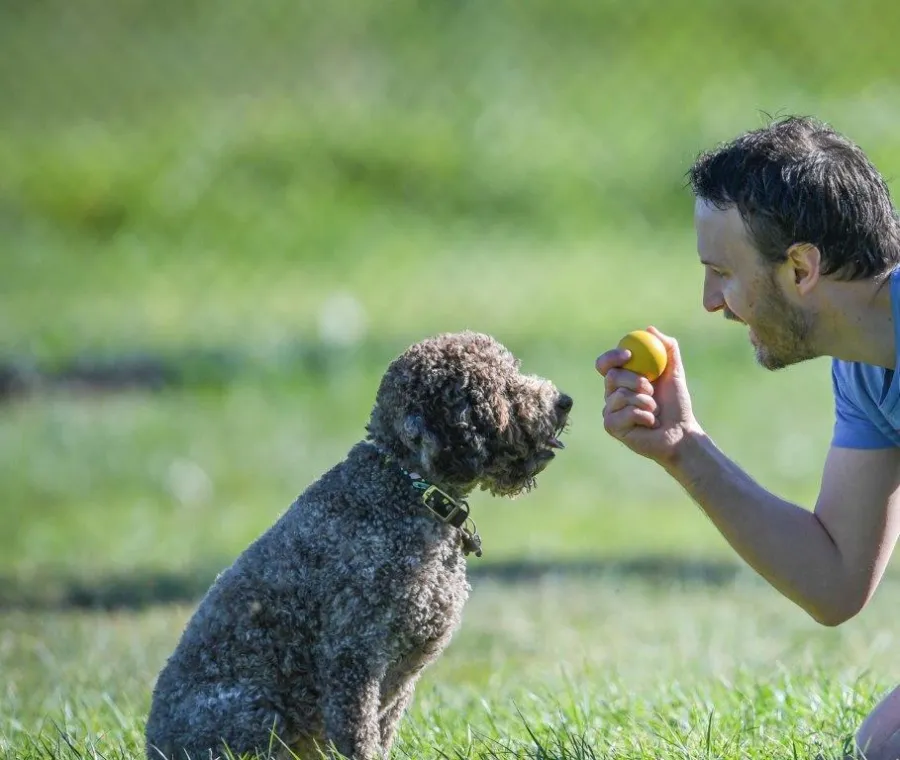
- Training is more effective if carried out in short bursts and not on a daily basis as this can be too much for the dog to absorb.
- Remember training in itself (even using positive reinforcement) can be stressful and excessive stress can interfere with learning.
- Don’t try to train your dog if it is in a highly aroused or hyperactive state as he will be unable to focus.
- A dog may associate a command with a particular location where he was trained, so if the dog was trained at home, he may not obey in a different location. It is therefore important to vary the location when training.
- Use vocal commands in a calm voice, with visual cues as well.
- Consider what your dog is most motivated by - a special treat, toy etc.
- Trainers advise not to use the training reward at other times, for example: do not give dogs treats just as a routine practice otherwise the reward loses its value.
Socialising your dog
To prevent your dog from becoming a danger to others, or nuisance barking, keep your dog stimulated, exercise your dog daily, socialise to other people and dogs and provide regular training and plenty of interaction. If your dog is aggressive towards other dogs, use a muzzle or walk on a leash.
Effective control
You can walk your dog in specific off-leash areas in Geelong only if under ‘effective control’.
Otherwise dogs are to be kept on leash in all public spaces unless otherwise signed.
Tips on training for effective control
- Focus on the three Ds : distance, duration, distraction. Do not try and increase all the same time. Focus on one at a time: increasing the distance at which your dog will successfully recall to you, focus on the duration it takes for your dog to respond when recalling, and add distractions gradually.
- It may be beneficial to start training in a relatively distraction-free environment and slowly add distractions.
Related information
Page last updated:
We are glad that you find this page helpful!
Submitting feedback... Please wait.
An error occured! Please try again.
Feedback submitted successfully!
Thank you for your feedback. We value your input and will use it to improve our services.