There is an ever - increasing range of products claiming to be environmentally friendly, but when it comes to compostable products there are only two labels in Australia that matter.
Compostable labelling
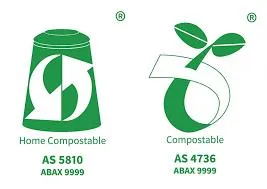
These are the Australia Standard labels AS 5810, also known as ‘home compostable’, and AS 4736, also known as ‘compostable’, which are only allowed on products which have passed strict guidelines.
A little surprisingly, the standards for 'home compostable’ and ‘compostable’ differ, which in turn means the way we should dispose of them differ. The other surprise for some consumers is compostable products are not always the best option.
Confused? That’s okay – we’ve created a simple guide to help you choose whether to go compostable.
What the two Australian Standard composting labels mean
AS 5810-2010: Home Compostable
Products marked with AS 5810 can go into your home compost bin and feature a picture of a compost bin on their label. Under test conditions, AS 5810 products need to biodegrade within a year. However, it's important to note that in the imperfect conditions created by a home gardener, particularly those starting their compost journey, they could take significantly longer. Test a small piece in your own bin before adding larger amounts.
AS 4736-2006: Industrially Compostable
Packages marked with AS 4736 can only be composted in special industrial or commercial facilities with the right technology, and feature a picture of a leaf on their label.
In Greater Geelong, which does not have a local commercial composting facility, this means they can neither go in your home compost bin nor your garden waste bin and must be placed in the landfill bin.
While some councils do accept industrially compostable items like bin liners and food packaging in their food and garden bins, the Victorian Government has recently announced that compostable packaging will no longer be accepted in green bins across Victoria from 2027, due to contamination from the chemicals used to make these items.
Unless the business that's provided the compostable item has its own composting program for them, you should avoid these items for now, opting for recyclable or made-from-recycled-materials alternatives instead.
When is compostable packaging a good option?
Composting is a fantastic way to reduce waste – but only if that material is actually going to be composted, and not end up in landfill! Otherwise, the term “compostable” can be marketing spin that makes consumers feel better about purchasing more, without actually having a good impact on waste.
Here are a few things to consider before you choose compostable packaging:
Reusable packaging is usually better than compostable packaging
Compostable packaging is designed for single use and will eventually break down, while reusable packaging can be used multiple times. Both packaging types require resources to create them. With correct care reusable packaging can last many years, even decades.Reusable packaging may have a higher upfront cost, but in the long run when used and cared for correctly can save both money and resources.
Overall winner: Reusable packaging
Recyclable packaging – even plastic! - can be better than compostable options
The material resources in recyclable packaging are intended to be used over and over in a closed loop recycling system, while compostable packaging is designed to be used once before being composted.While recycling requires energy and resources to process and transport, if the system is designed and used correctly, resources could be used an unlimited number of times. When we choose compostable packaging, the material resources are returned to the ground.
Both compostable and recyclable packaging face the same challenges in that to reap the environmental benefits, consumers must dispose of them correctly.
Overall winner: Too hard to call, so choose the option you are confident you can dispose of correctly.
Compostable packaging is a better choice than non-recyclable packaging
Single-use non-recyclable packaging is designed for one-time use and then discarded into landfill or incinerated. Compostable packaging is designed to be single use too, but then break down into compost.It's a clear win when you can dispose of compostable packaging correctly, but even if landfill is the only option, you're helping to support an industry for compostable packaging by choosing these items over non-recyclable, non-compostable versions.
Overall winner: Compostable packaging
Tell us how you went!
We are very interested to hear how reader’s attempts at home composting AS 5810 items have gone. We would also love to learn about any businesses or organisations you come across in the local area who are composting their own AS 4736 products.
Want to read more stories like this? Sign up for our Rethink Your Rubbish e-news and receive monthly updates.
Australian Standard Composting Label 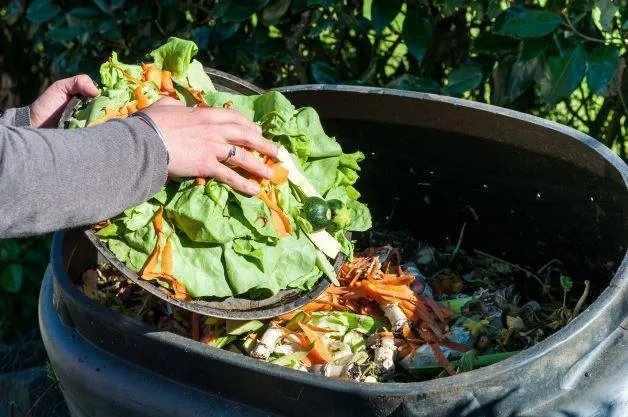
Compost bin
Click on an image to view details and enlarge
Page last updated: