This is the second in a series of three articles we've prepared with tips from members of the Geelong West Community Garden to help you minimise garden waste.
Excess garden waste - green bin alternatives
Balancing a steady flow of garden waste within the confines of a fortnightly collection can be a fine art. While lawn clippings and pruned branches might fit easily into the bin in winter the rapid growth prompted by warmer temperatures can turn bin night into a test of wills between you and the available space.
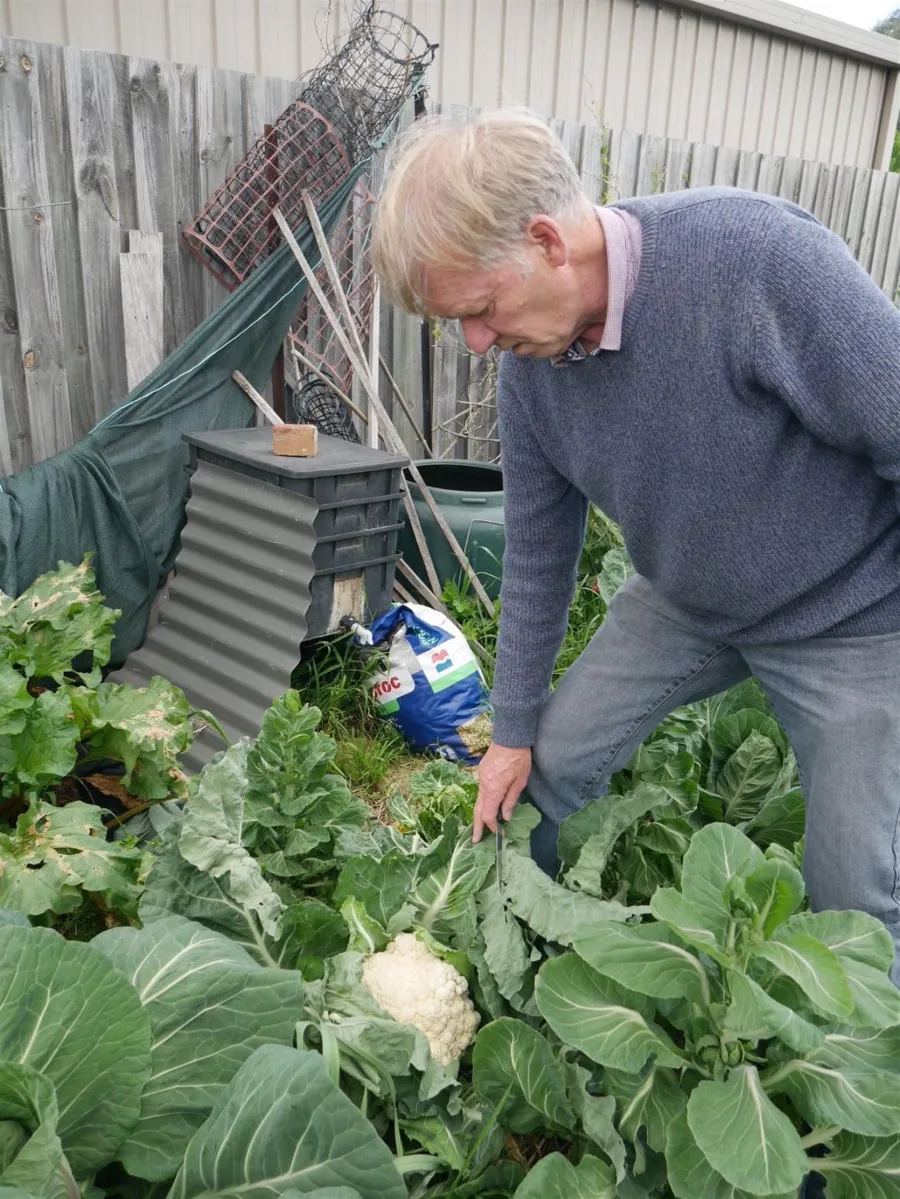
With just one 240-litre bin available on-site Geelong West Community Garden member and self-confessed lazy gardener Brian Voysey has a system for managing garden waste which also helps his garden to thrive.
Here’s Brian’s three-step plan with special comments from Rosemary Nugent who is also a member of the garden.
Step 1: Worm farm
Brian has a worm farm on his plot which he predominantly uses for kitchen scraps. This suits the worms as they need small and regular feeding. However when the green bin starts to overflow dried grass and deciduous leaves can be placed in the worm farm as well.
The worm farm is an excellent way of helping Brian’s plot to thrive as the worm juice and worm castings are a great fertiliser for the garden.
Step 2: Compost bins
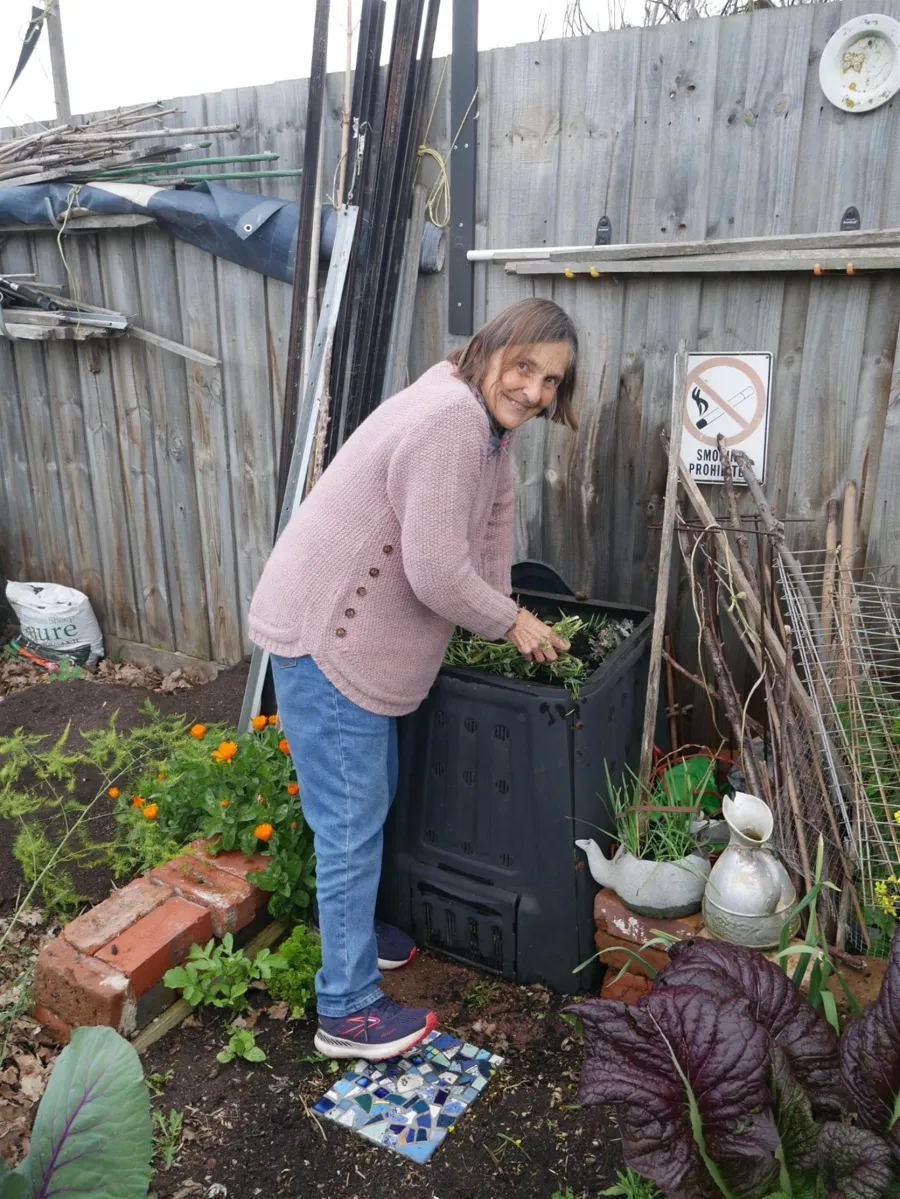
According to Rosemary the answer to managing green waste is pretty simple: “I think every person should have a compost bin or compost heap.”
Brian agrees and he has two compost bins on his plot. “I reckon you can spend almost a lifetime trying to fill one because they just keep going down.”
While compost is a topic that generates a lot of discussion among gardeners Brian takes a fairly laidback approach. As well as adding kitchen scraps and plant matter from his vegetable garden he also adds shredded paper and leaves from the garden’s oak tree.
I don’t go too technical with the brown and green and all that. It’s not perfect…I might dig the fork in every now and again.
The trick is to keep the heap dampish. If it’s too moist you keep on adding your brown…add some water if it’s too dry.
Once the compost has broken down completely Brian and Rosemary dig it into their gardens to add valuable organic matter to the soil encouraging healthy plants.
Step 3: Dig a trench
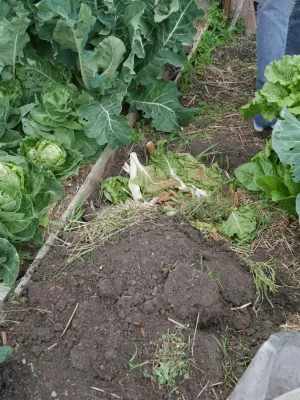
When Brian’s organic waste exceeds the capacity of his worm farm green bin and compost bins combined – for example at the end of a growing season or at harvest time – he digs a trench and buries the waste.
This works a bit like a compost heap but avoids the need to transfer the compost from the bin to the garden. While the breaking-down process can be slow chopping up the waste and lining the trench with broken down twigs will speed up the process. But for Brian this is a bit too much trouble.
I’m basically lazy so I just chuck it in. The worms will do the job for you. I might stand on it – that’s about as much as I do to make it go down – and then you just put the dirt over the top.
Branches and logs
While the steps above are great for managing most types of garden and organic waste woody branches and logs can’t generally be managed this way. Here are some suggestions for managing these:
- Weave branches into a trellis or similar structure and use it to support plants such as climbing beans.
- Use or borrow a mulcher to convert branches into a water-saving mulch for the garden.
- Put branches and small logs into your green bin and we’ll convert them into compost that is available to be purchased locally.
Want to read more stories like this? Sign up for our Rethink Your Rubbish e-news and receive monthly updates.
Geelong West Community Garden 3 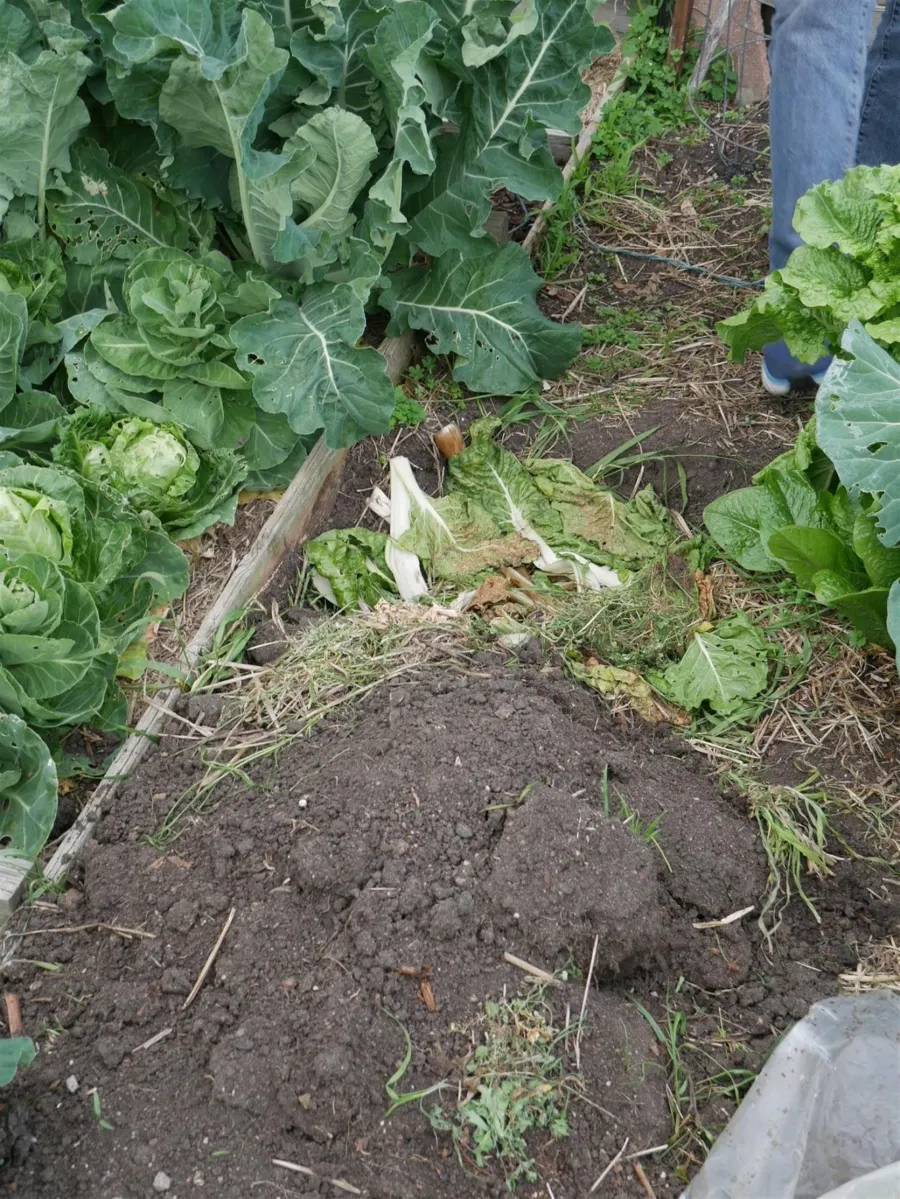
Geelong West Community Garden 4
Click on an image to view details and enlarge
Page last updated: