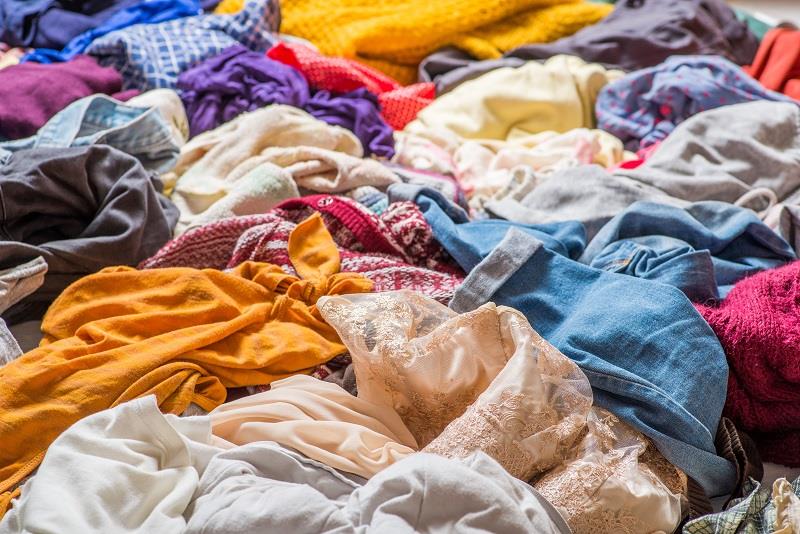
According to the Circular Economy Business Innovation Centre, the average Victorian generates 28 kilograms of textile waste each year, only seven percent of which is recycled!
Textile triage (part 1): How to recycle clothing and textiles
In fact, along with plastics, textiles have some of the lowest rates of recycling and resource recovery among all materials, according to the Australian Bureau of Statistics (ABS).
ABS figures also show households are responsible for 90 percent of the country’s textile waste.
While this may seem daunting, it can be viewed positively: as households create this waste, it means they have control over it. What you do with your used textiles sends a message to manufacturers and government.
To donate, or not to donate?
When thinking about getting rid of unwanted textiles, the first thing that comes to mind for many of us is a visit to the nearest charity shop.
While this is a great way to rehome clothes that could otherwise go to landfill, not all clothes are suitable for donating. It is an unfortunate truth that charities are paying $13 million a year to send 60,000 tonnes of unusable donations to landfill each year.
To help you decide if something is good enough to donate, Planet Ark suggests you ask yourself a simple question:
Would I feel comfortable giving this to a family member or friend to use?
If the answer is no, it probably isn’t good enough to donate either.
Clothing and textiles that are not fit for donation - always check with the manufacturer first
Many brands now such as H&M, Patagonia, Sheridan, Rebel Sport, Zara and Uniqlo offer in store recycling for their customers and accept a range of textile products in all conditions, sometimes from any brand.
We recommend returning textiles that are not fit for donation to manufacturer run recycling programs as the best action for disposal for two main reasons. Firstly, this is good product stewardship - manufacturers are taking responsibility for the waste they helped generate, instead of passively letting it go to landfill or relying on charities and volunteers. Secondly, if customers do not use these programs, it sends the message to companies that they are not needed, or, in some cases may render the program financially unviable.
If the manufacturer does not offer a return for recycling scheme, let them know you want one. Email, call, write, comment on their social media page or ask when you are in store. Tell them you will choose companies that do offer this in the future - remember, your dollar is your vote!
Clothing and textiles that are not fit for donation - options for when there is no brand run recycling program
Even if the brand that manufactured your textile product doesn't have a recycling program, you can still recycle it.
The table below lists where different items can be dropped off, or even picked up from your home. Always make sure items are clean first, as mould is a problem in textile recycling processes.
| Item | Where to recycle |
|---|---|
| Clothing in any condition |
|
| Curtains couch and cushion covers |
|
| Fabric and sewing scraps |
|
| Mattresses |
Mattresses collected through the above options are recycled by GDP Industries. |
| Mattress protectors |
|
| Sheets and doona covers (no pillows or doonas) |
|
| Shoes in any condition |
|
| Towels |
|
| Toys |
|
| Wetsuits |
|
My textile product isn't listed in the table above
There are some products, such as cushion inserts, pillows, doonas and carpets that we have been unable to find a recycling option for. If you know of any, or any other great textile recycling programs available to residents in Geelong, we'd love to hear about them. Get in touch by emailing us.
Textiles
Page last updated: