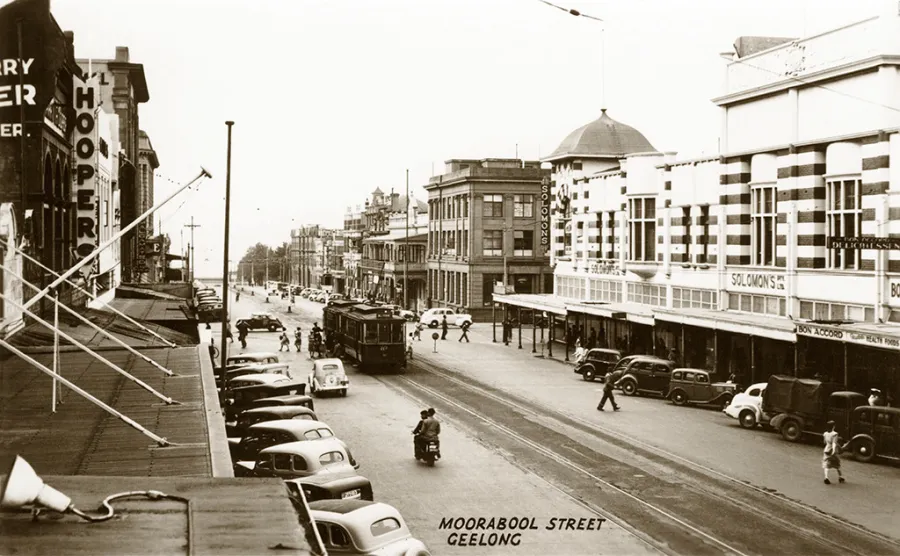
Darwin had been bombed by the Japanese in February, and the Australian ore carrier SS Iron Crown was torpedoed by a submarine in the Bass Strait in June. A brown-out of lighting had been imposed so that Geelong was a less visible target from the air. Blackout curtains went up in homes. Cars, motorbikes, and bicycles had regulation hoods fitted over their headlamps. Down the road at Johnstone Park, model air shelters were built for anxious householders to copy.
On 16 April 1942, the Greater Geelong Evacuation Committee met at the City Hall and drew up a scheme for the evacuation of children. Solomon’s, Geelong’s biggest department store, which had 30 of its staff either in the military or air forces of the Commonwealth, came on board. They advertised materials and sewing instructions for ‘evacuation knapsacks’ in the Geelong Advertiser. The newspaper ran an accompanying editorial, suggesting what to pack: Vegemite sandwiches, barley sugar, a rug, a change of clothes.
Text: Maria Takolander
Page last updated:
We are glad that you find this page helpful!
Submitting feedback... Please wait.
An error occured! Please try again.
Feedback submitted successfully!
Thank you for your feedback. We value your input and will use it to improve our services.