The bride unlaced her petticoat in the pitch darkness of the slab hut.
Lillias Strachan visits Geelong - Bronze Stories: Geelong Unearthed
In 1838, Lillias Strachan arrived in Geelong with her new husband, an ambitious wool broker who had already established a business.
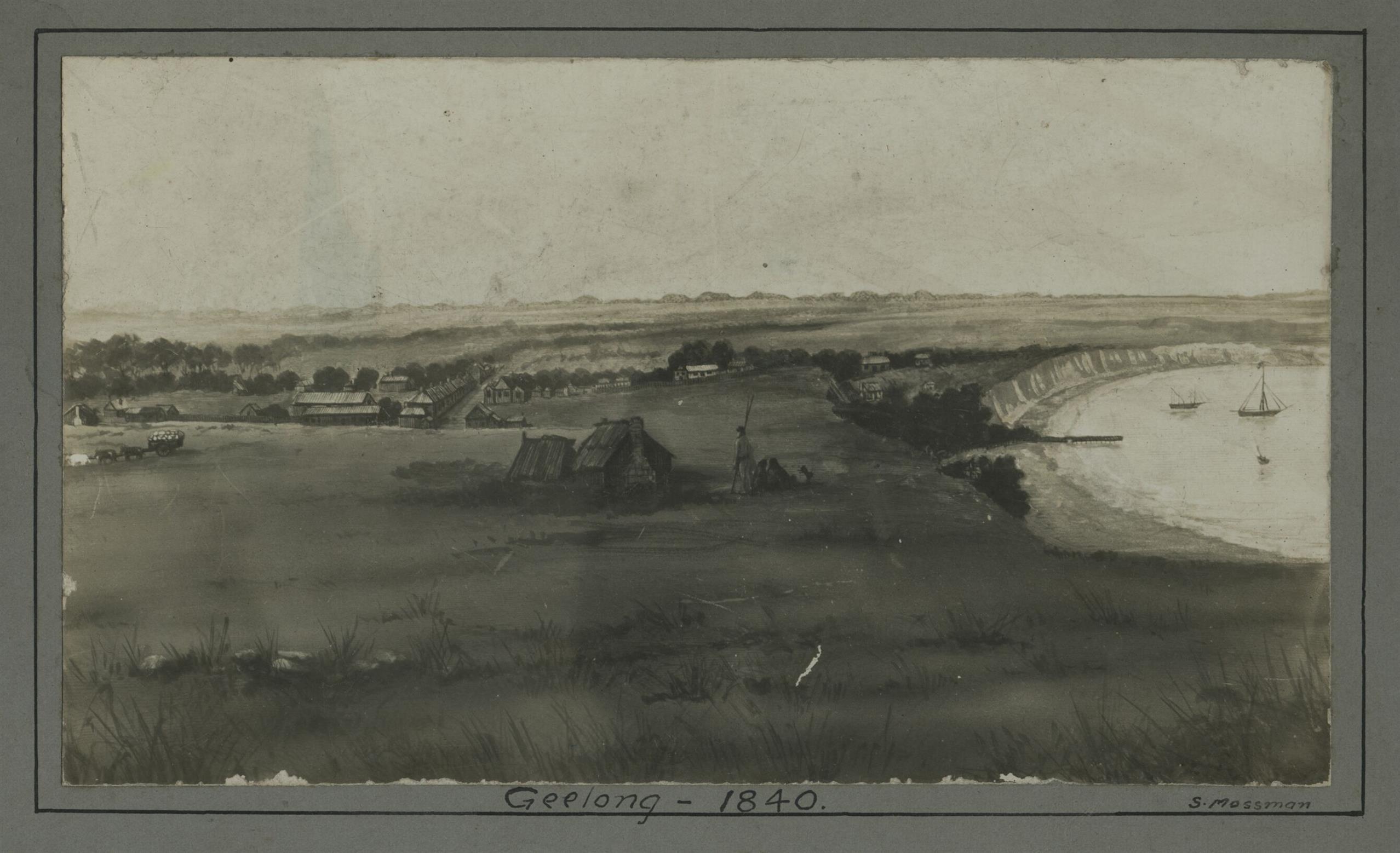
Geelong had just been declared a town, but she counted only six huts and more Wadawurrung than Europeans. She seemed to be the only European woman here. How could they think they had a claim to this place?
Lillias and her husband stayed at the Woolpack Inn, a hut built of rough split slabs in an area half-cleared for grazing. Later, the Woolpack Inn was demolished and rebuilt into a far grander hotel, Mack’s. But back then it had a small room that passed for a parlour, four tiny bedrooms and an unlicensed bar.
That night, Lillias turned off the lantern and undressed in pitch darkness, convinced that the Wadawurrung were peering through the cracks into her room. The dark and cramped quarters didn’t make undressing easy—what with all the fastenings on her dress, petticoat, and stay. Lillias sailed back to her family in Hobart Town soon after. She had no doubt of her husband’s love.
The following year he named a schooner in her honour, and soon after her name came to grace the entrance—Point Lillias—to Corio Bay. But Lillias would not return to Geelong until her husband had built her a house made of stone.
Text: Maria Takolander.
The plaque for this story is located on Brougham Street at the eastern end of the façade of Strachan and Co Woolstores. A plaque high on the façade commemorates the former site of Mack’s Hotel, which replaced the Woolpack Inn and which was itself demolished to make way for an extension of Strachan and Co Woolstores. Lillias moved to Geelong in 1843 after her husband had built her the first stone house in Geelong, on the corner of Moorabool and Brougham Streets. Their next home was the heritage-listed Lunan House in Drumcondra.
This story was unearthed with the help of Les Blake’s Tales from Old Geelong and published after consultation with the Wadawurrung, the traditional owners and custodians of these lands.
Market Square
Page last updated: