The names we give our streets, parks and public places will continue to tell the story of Greater Geelong.
Greater Geelong place names to better represent community
Thursday, 29th October 2026
The names we give our streets, parks and public places will continue to tell the story of Greater Geelong.
The City’s new Place Naming Policy, adopted at the October council meeting, provides a clear, consistent and culturally informed approach to naming decisions.
Already, the City has been recognised for its progress in making Greater Geelong’s place names more representative, particularly through our work to increase the visibility of women.
The new policy formalises that direction and broadens the lens, by prioritising Aboriginal culture, gender equity, multicultural communities, and local heroes and history.
All names must still meet the state government’s naming rules for places in Victoria, in line with the Geographic Place Names Act 1998.
Other key points of the policy include the role of a name bank, a preference for posthumous commemorative names with family approval, and a requirement for major sporting facilities to include the region in the title, such as Geelong Baseball Centre.
The draft policy was guided by Wadawurrung Traditional Owners Aboriginal Corporation, Cultura and a Gender+ Impact Assessment, and opened for consultation in March and April.
Among the changes made in response to feedback from councillors and 142 community members, the City clarified the policy’s prioritisation framework and decision-making process.
The policy also states re-naming should only occur in limited circumstances and in accordance with the state’s naming rules.
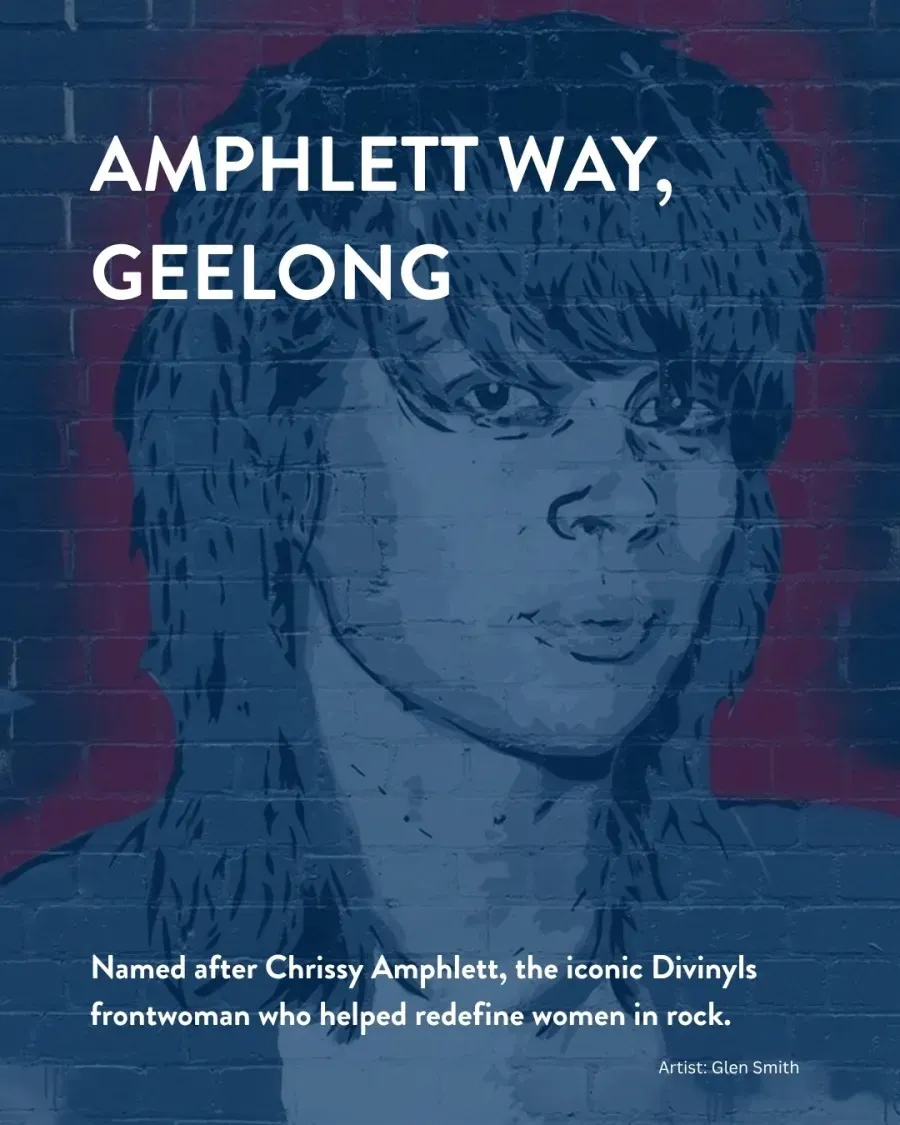
Recently, the City was recognised by the Put Her Name On It project for naming seven of eight new roads in honour of women, including Amphlett Way in Belmont.
The endorsement of the Place Naming Policy comes after the decision was deferred from the August council meeting and adjourned from the September council meeting.
Mayor Stretch Kontelj OAM
I think this council, through its action and leadership, has actually been very good and acted in accordance with this policy regardless what may be in writing. I think we’ve been very respectful of the prioritisation that were articulating in this document.
As the portfolio holder, and chair of Aboriginal and Torres Strait Islander Partnerships, I’ve been conscious to have discussions with Wadawurrung Traditional Owners Aboriginal Corporation. For me, it’s a relationship-based proposition that we will work with Traditional Owners in relation to opportunities that are aligned to their interests. The policy will guide us as far as all the other categories are concerned.
The policy has a sunset review period of two years so we have the opportunity to see how it works.
Cr Elise Wilkinson
Council should have a clear, transparent, legislatively compliant framework to guide these decisions – a policy that addresses an imbalance that exists because of historical sexism and racism.
Equitable representation fosters belonging – seeing ourselves reflected creates safety and respect. It says the work, stories and achievements of women, First Nations People and people from multicultural backgrounds also matters to our community.
Cr Emma Sinclair
What we’re talking about is the partial restoration of a language that has existed in this country for millennia. When I go to Biyala Community Hub and see the river red gums that place has been named for I have a deeper understanding of the land that I was born on and it strengthens my connection to where I live. I’m grateful to the Wadawurrung for sharing that with me.
There are more streets in my suburbs named after Game of Thrones characters than there are women. If the entire world can learn how to say Daenerys Targaryen during the show run, we can learn to say Biyala and we can learn to say Yirrama.

Dhilpamarna Auditorium at Norlane ARC
Page last updated: