The countdown is on for one of nature's most extraordinary spectacles, with an Amorphophallus titanum, commonly known as a Titan Arum or corpse flower, expected to bloom at Geelong Botanic Gardens.
Return of the Stench: community invited to witness a rare corpse flower bloom
Wednesday, 11th November 2026
Endemic to the rainforests of Sumatra and listed as endangered, corpse flowers can grow up to three metres tall and flower for just 24 to 48 hours, making them one of the world's largest and rarest flowering plants.
When blooming, corpse flowers mimic the smell of rotting flesh to attract pollinators.
This fleeting natural phenomenon attracts global interest, with visitors eager to witness the dramatic unfurling of its deep burgundy bloom and experience its infamous pungent stench.
Typically blooming every seven to 10 years, this is the second corpse flower in the Geelong Botanic Gardens collection to bloom in as many years, giving the community another chance to experience the spectacle.
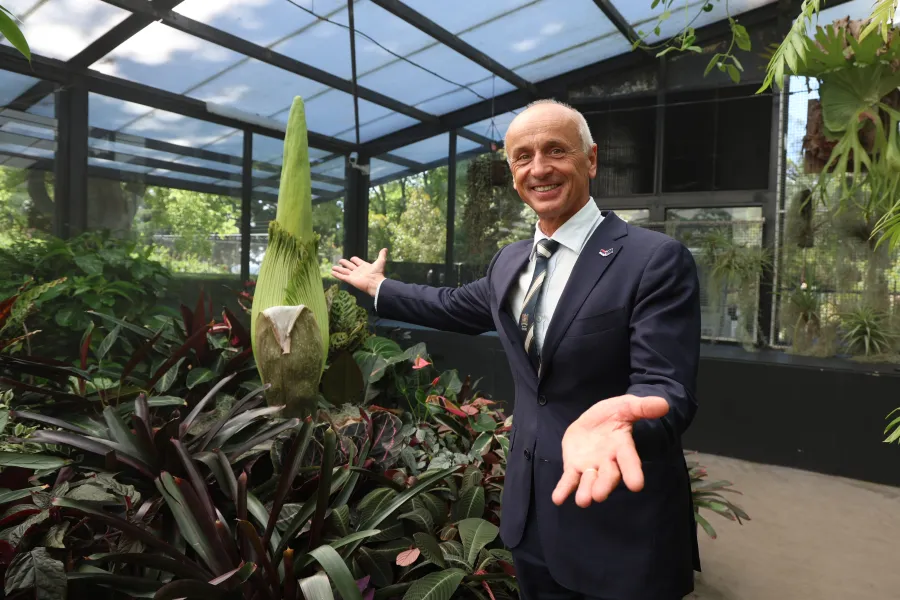
Affectionately known as "Pete" by Gardens staff, the corpse flower is on public display in the Conservatory and predicted to bloom over the next week or so.
Since emerging from dormancy last month, the corpse flower has been growing about five centimetres a day and is now about 1.5 metres tall. A thermal imaging camera is also tracking the plant's temperature as it prepares to bloom, capturing the heat generated to help disperse its infamous scent and attract pollinators.
The community can watch the action unfold via a livestream on our website at geelong.link/Corpse2026 and stay up to date through daily updates on the City of Greater Geelong's social media channels.
Greater Geelong Mayor Stretch Kontelj OAM
We invite everyone to be part of this remarkable moment for Geelong, especially if you missed our first corpse flower bloom in 2024.
That event captivated audiences across Australia and beyond, drawing over 20,000 visitors to the Gardens and clocking up more than 350,000 livestream views.
To be able to enjoy this rare spectacle right here on our doorstep is a credit to the incredible work and dedication of our Gardens team. They maintain and care for diverse plant collections, including rare and unusual species like the corpse flower.
Events like this help highlight the important role botanic gardens play in research, education and safeguarding endangered species for future generations.
Both corpse flowers were propagated by the team at South Australia's Botanic Gardens and State Herbarium and donated to the Geelong Botanic Gardens in 2021. The team also propagated "Putricia", which attracted international attention during its bloom at Royal Botanic Garden Sydney last year.
Amorphophallus titanum expert and Senior Horticulture Curator Botanic Gardens and State Herbarium South Australia Matt Coulter
The Titan Arum, Amorphophallus titanum takes years to build enough energy to produce its spectacular bloom, making every flowering a truly special event.
Plants like this capture people's imagination and create a valuable opportunity to connect visitors with the science and conservation work taking place behind the scenes.
We're delighted to see a plant with connections to South Australia’s Botanic Gardens thriving in Geelong and helping inspire a new appreciation for the importance of plant conservation.
The bloom presents a valuable conservation opportunity. Horticulturalists from Geelong Botanic Gardens are working with experts from Royal Botanic Garden Sydney and Royal Botanic Gardens Victoria to collect and preserve pollen for future pollination efforts, contributing to the long-term conservation of the species in cultivation.
The Conservatory is open daily from 9 am-3 pm, with extended opening hours during the bloom, giving visitors more opportunities to see the corpse flower. Stay up to date with bloom forecasts, livestream information and visitor updates via the City of Greater Geelong website and social media channels.
The Titan Arum, known as the corpse flower, on display at Geelong Botanic Gardens.
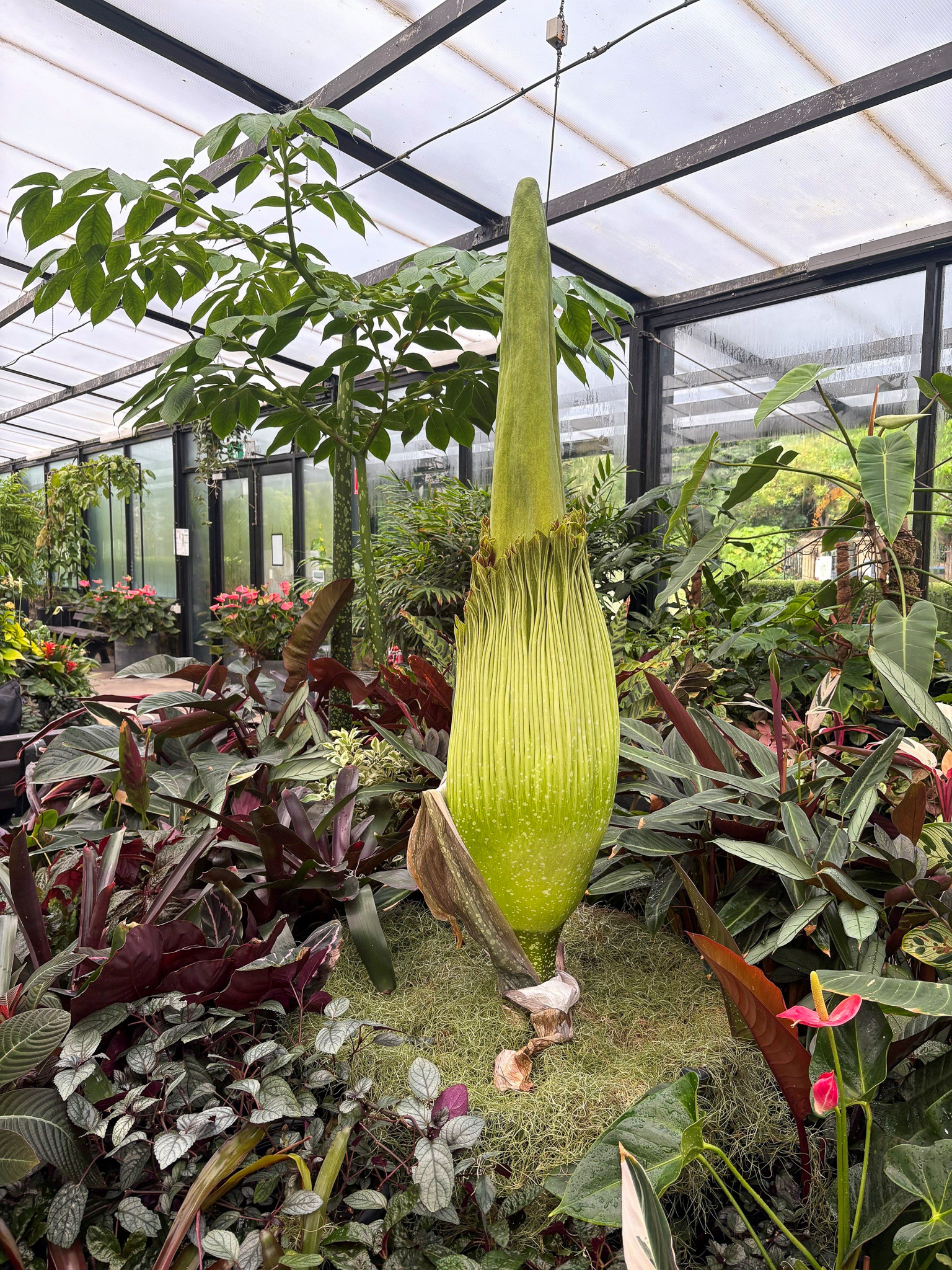
The Titan Arum, known as the corpse flower, on display at Geelong Botanic Gardens.
Corpse flower livestream
Page last updated: