Located on Wadawurrung Country, Wurriki Nyal honours the Aboriginal cultural heritage of the region. It includes three permanent art installations by Wadawurrung artists - Dr Deanne Gilson, Kait James, and Billy - Jay O'Toole.
Celebrating Aboriginal Art and Culture
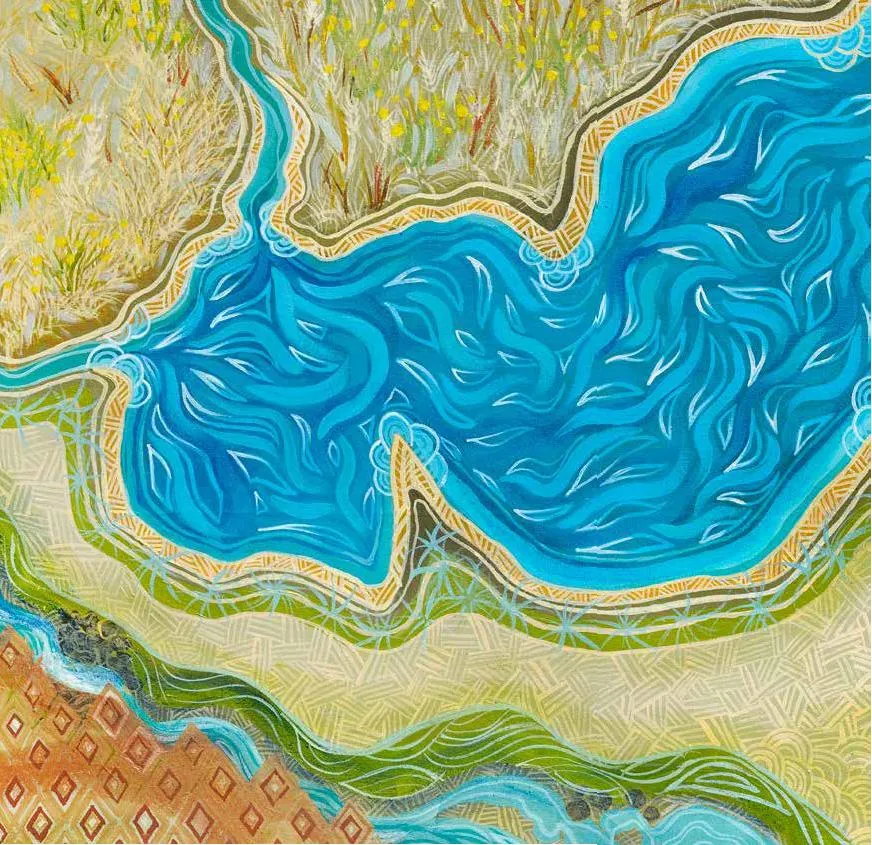
Wadawurrung Dja by Dr. Deanne Gilson

In the ground floor atrium of Wurriki Nyal is a series of panels by emerging Wadawurrung elder and award-winning artist, Dr. Deanne Gilson.
Featured in her exhibition Wadawurrung Dja: Awakening Country, the artworks capture the changes throughout the six Wadawurrung seasons by painting her Dja (Country), people, plants and animals.
Gilson uses her Wadawurrung Creation Story as the beginning point within all her cultural artworks. The Creation narrative extends to the elements of Earth, Air, Fire and Water as well as portraying the six Kulin seasons.
Ngarrai by Kait James

Wadawurrung Artist Kait James, best known for her work embroidering kitsch tea-towels to subvert colonial history, is a rising name in Australia’s arts scene.
James designed a 5-storey artwork for the new Wurriki Nyal Civic Precinct called Ngarrai, the Wadawurrung word for the Drooping Sheoak tree.
The trees are common in Wadawurrung Country, and provided shelter, medicine, and wood for tools for generations of Wadawurrung people. Its seeds were ground to make flour, and the soft leaf litter was used to cushion babies.
Each level of the design explores a different aspect of this culturally significant tree, from the branches, leaves, seed pods, pollen and leaf litter.
Warri & Yallok fins by Billy-Jay O'Toole
.png)
Billy-Jay (BJ) O’Toole grew up in Geelong on Wadawurrung Country, and is passionate about educating people about his culture and love for land through his art.
For Wurriki Nyal, O’Toole developed two artowrks; Warri Saltwater Country and Yallok Freshwater Country. His artworks started as charcoal sketches on paper, and worked closely with the City to convert his art to 3D models to be manufactured into the building’s fins.
The Warri design features wave patterns, reminiscent of the lapping waves in Corio Bay, which provided the Wadawurrung people with food and resources for centuries. The fins look over the bay from the upper floors of the building.
The Yallok design features radiating circles, symbolising the gathering of Aboriginal people at fresh water sources throughout the creeks and rivers of Wadawurrung country.
Guidelines of use
These cultural features in the public space are for all to enjoy, but also require respect and understanding. While enjoying these spaces, please take note:
- No smoking in the space
- No alcohol
- No litter or rubbish is to be left in the space
- No violent or abusive behaviours or language
Page last updated: