Community Engagement Policy 2026-30
| Community Engagement Policy | Version: | 2 |
| Approval Date: | 26 May 2026 | |
| Approved by: | Council | |
| Review Date: | May 2030 | |
| Responsible Officer: | Executive Director City Life | |
| Authorising Officer: | Chief Executive Officer | |
Acknowledgement of country
The City of Greater Geelong acknowledges the Wadawurrung Peo-ple as the Traditional Owners of this land. We also acknowledge all other Aboriginal and Torres Strait Islander People who are part of the Greater Geelong community today.
We recognise the important civic leadership role that community engagement can play in promoting and fostering genuine reconciliation leading to real outcomes. We want to understand Aboriginal and Torres Strait Islander cultures and histories; and to acknowledge the experiences and needs of Aboriginal and Torres Strait Islander peoples living within the City of Greater Geelong region so they feel listened to respected and valued.
Introduction
Thanks to our community, councillors and city employees
Over several months we (the City of Greater Geelong) invited community, Councillors and City employees to be part of conversations online, in person, and in community settings about what meaningful engagement looks like and how it can work better for everyone. Your input has directly influenced this updated version of the policy. You told us you’d like us to focus more on face-to-face engagement, clearer communication, transparency in decision-making, timely follow- up, and better support to get involved.
This policy builds on the community’s feedback in 2020–2021 and takes a step further in becoming a clearer, more community-facing document. It reflects what we heard and our commitment to making engagement more inclusive, transparent and meaningful.
We appreciate your time, insights and interest and we look forward to continuing to grow a stronger culture of collaboration and good decision making, together. To learn more about the consultation process behind this policy, visit the Community Engagement Policy Have Your Say page.
Purpose
A collaborative partnership between Council and the community can be a powerful way to deliver positive changes across our region. We value the knowledge, ideas and life experiences of our diverse community. Good community engagement helps us listen, learn and make better decisions. For now, and for the future. This policy promotes a culture of shared understanding, capability building and transparency, bringing diverse perspectives together to strengthen community awareness of decision-making processes, now and over time.
This policy supports our Council Plan 2025-29 goal to deliver better outcomes for the people of Greater Geelong. This includes a commitment to the highest levels of leadership, integrity, financial stewardship and meaningful community engagement.
This policy details our commitment to best-practice community engagement in order to:
Enhance community participation: Encourage and facilitate active participation from all community members, ensuring their voices are heard and considered in decision-making processes.
Build trust and transparency: Foster trust and transparency between the City and our community by providing clear, accessible, and timely information.
Promote inclusivity and diversity: Ensure that engagement activities are inclusive and reflect the diverse needs and aspirations of the community.
Support informed decision-making: Provide decision-makers with comprehensive and diverse community input to inform policies, plans, and projects.
Strengthen relationships: Build and maintain strong, respectful, and collaborative relationships with community members, stakeholders, and partners.
This policy helps the City and our Council not only meet its engagement obligations as described under sections 55 and 56 of the Local Government Act 2020 (Vic) but truly harness the expertise and advice of the community it serves.
What is community engagement?
Community engagement allows Council to gain a deeper understanding of diverse points of view, values,
concerns, and priorities when shaping decisions, plans, and services that affect people’s lives. It’s a two-way process: we listen to the ideas, concerns, and experiences of our community, and we share information about what’s planned or decided.
We use a range of engagement approaches, such as surveys, workshops, phone calls, pop-up sessions at locations our community visit, and panels, to make engagement accessible, inclusive and flexible to suit different lifestyles and abilities.
Effective community engagement means asking the right questions, of the right people, at the right time, and in the right way, ensuring that community voices meaningfully inform the decision we make.
Why is engagement important?
Engagement gives our community the opportunity to inform the decisions Council makes and the strategies we develop, ensuring they reflect community views and values. Engagement empowers people to contribute to the future of the places where they live, work, do business, study, and play, and helps build trust and confidence in local democracy.
By bringing together people from different backgrounds and perspectives, engagement increases understanding of the issues, challenges, and opportunities related to a project or policy. This shared understanding helps the community make more informed contributions and leads to more transparent, sustainable, and widely supported decisions.
Even when views differ, effective engagement shows that decisions are made with a clear understanding of our community’s needs, aspirations, and challenges.
Our commitment
We approach community engagement with openness and a genuine commitment to listening. We seek to understand our community's needs, experiences and values, and use community feedback to contribute to our planning and decision-making.
Scope
This policy guides everyone who plans or carries out community engagement for us, including staff, Councillors, contractors, external providers and volunteers. This Policy must be applied in conjunction with the City’s obligations under the Child Safe Standards whenever engagement involves children or young people.
This policy does not cover the following engagements:
- those related to planning permit applications and planning scheme amendments governed by the Planning and Environment Act 1987 (Vic)
- legislated engagements governed under other Acts.
Understanding our community
Greater Geelong has approximately 289,565 residents (2024). Whilst parents and home builders aged between 35 and 49 are currently the largest age group, most of the population growth over the next 20 years will be in
people aged 85 years and over.
The City strives towards an equitable approach to community engagement, which means we will look for ways to offer support and remove barriers to encourage hearing from priority populations:
- First Nations peoples: 1.3% of the population (ABS, 2021)
- Multicultural communities: 17.7% of residents were born overseas (G21, 2023), and 11.7% of residents speak a language other than English at home (Profile id, 2022)
- Children and families: 37.9% of households in Greater Geelong have children (Profile id, 2022)
- Young people: 17.8% of residents are aged between 10 and 24 years (Profile id, 2022)
- Older people: 31.5% are aged 55 years and over (Profile id, 2022)
- People with disabilities: 22% identify as having a disability; 6.5% of residents have a severe or profound disability and need assistance with day-to-day living (ABS, 2018)
- LGBTQIA+ communities: 9.6% of residents identify as LGBTQIA+ (VPHS, 2023)
- Socio-economic disadvantaged: particularly health care card holders, single parent families and those with lower levels of education (ABS, 2021).
From our Community Health & Wellbeing Strategy 2025-29.
Definitions
The following definitions apply to this Policy:
| Term | Definition |
|---|---|
| Act | Local Government Act (Vic) 2020. |
| City | The City of Greater Geelong organisation, led by the CEO. |
| City Officers | Includes employees, volunteers and contractors. |
| Committee | A delegated committee, joint delegated committee or community asset committee under sections 63, 64 and 65 of the Act, respectively. |
| Council | The City of Greater Geelong Council comprised of elected councillors and led by the Mayor. |
| Country | Refers to the land, waters, and natural resources that are traditionally owned and cared for by Aboriginal and Torres Strait Islander peoples. It encompasses cultural, spiritual, and economic connections to the land. |
| Deliberative engagement | Delibera-tive engagement is a way of working closely with our community on complex, long-term or high-impact issues, especially where perspectives may differ. Deliberative engagement involves people who broadly represent our community. It involves deep, thoughtful conversations over weeks or months, bringing peo-ple closer to decision makers. Participants are given a clear task, the information they need, and enough time and space to explore different views, work together, and shape well-informed advice that can influence decisions. In this approach, participants are provided with:
|
| ELT | The Executive Leadership Team of the City, as constituted from time to time. |
| Engagement | Community engagement is how we work together with our community in a thought-ful and planned way. It means sharing information, listening to people’s ideas and concerns, and involving them in decisions that affect them. This can include things like surveys, polls or drop-in sessions where people can give feedback or suggest ideas. It helps us make informed decisions by understanding what matters to the community, while still making sure we meet our responsibili-ties as decision makers. |
| Stakeholders | An individual or group with an interest in the decisions of the City and Council, that is directly or indirectly impacted by the decisions made and the final outcomes. |
| Us | The City of Greater Geelong organisation led by the Chief Executive Officer. |
| We | The City of Greater Geelong organisation led by the Chief Executive Officer. |
| Executive Director | A member of the Executive Leadership team of the City. |
Policy
Who we engage with
- We will engage with people who are likely to be affected by, or interested in, council planning and decision-making. This includes individuals, community groups, advisory committees, businesses, organisations, peak bodies, and other levels of government.
At the start of each engagement, we will identify who we need to hear from and include them as stakeholders in the engagement plan. We know that some people and groups face barriers to participating in engagement. These barriers may include disability, language or cultural differences, caring or work responsibilities, limited access to technology or transport, or age.
To hear a wide range of views and make sure our decisions reflect community needs, we will tailor our engagement activities so as many people as possible can take part. Where barriers are significant or certain groups are under-represented, we will reach out directly and provide support to help them get involved.
By engaging broadly and inclusively, we make informed decisions that meet the needs of our community.
We will not engage with people once it becomes apparent that their feedback or submissions are obscene, offensive, or racist.
Anonymity
Our current practice is to wherever practicable and permitted by legislation, to allow respondents to provide feedback anonymously. However, we often invite participants to voluntarily share relevant demographic information such as age, suburb of residence, and occasionally gender to help us understand who we are hearing from, and who may be missing from the conversation. Any demographic data collected is always optional and managed in accordance with the City’s Privacy and Health Records Council Policy.
- When we will engage
We engage with the community as early as possible when decisions or plans might affect people. Sometimes we will engage at several stages in the lead up to final plans or decisions.
When we will engage will include situations where we are:
- making plans – for example, developing strategic plans or policies, or planning for emergencies
- changing or evaluating something – for example a review of a program or changes to a service where those changes may have an impact on the community or Country
- making a decision that is likely to impact people and the places they live, work, invest or play – for example, introducing a new project, initiative or service
- seeking feedback on alternative draft designs or plans or gauging support for a proposal
- asking the community for local knowledge
- required by law to do so
- seeking to address an issue affecting the community that has been raised and requires a decision.
- These situations may involve a wide range of projects, plans, and initiatives, including:
- Strategic planning: Development and review of strategic plans, policies, and frameworks that guide the City's long- term vision and priorities.
- Capital works projects: Planning, design, and implementation of infrastructure projects, including roads, parks, community facilities, and public spaces.
- Service delivery: Evaluation and improvement of services provided by the City, such as waste management, community services, and recreational programs.
- Policy development: Formulation and review of policies that impact the community, including environmental, social, and economic policies.
- Community development: Initiatives aimed at building community capacity, fostering social inclusion, and enhancing the wellbeing of residents.
- Partnerships and collaborations: Engagement with external stakeholders, including government agencies, non-profit organisations, businesses, and community groups.
- We may also engage in cases where we:
- see that the broader community has raised, or expressed an interest in, a policy, initiative or service
- require assistance to identify community needs or aspirations
- desire to build capacity, provide information to increase knowledge and change behaviour
- seek new, or wish to strengthen, existing relationships with the community.
Situations where we may not engage
There are times when we may decide it is not appropriate to engage with the community. This would include situations where:
- decisions must be made immediately – for example, during a live emergency, or for occupational health and safety reasons
- the community has been recently engaged on the same issue and the views of community are well understood*
- demonstrated evidence and data from recognised sources already exist to inform the decision*
- decisions relate to the City’s day-to-day organisation operations
- legal or commercial restrictions prevent it
- we do not have the decision-making power.
*with approval from a City Executive Director.
How decisions are made
- We consider lots of things – including community feedback, internal and expert advice, data and research, and cost – when making decisions. When we make our commitment to community at the start of an engagement, we will also identify other factors that may influence the final decision.
While community engagement informs decision-making, it does not replace the responsibilities of elected representatives and City officers. Instead, it enhances decisions made in the best interests of the many Greater Geelong communities by helping to understand community needs, priorities, and the potential impacts of decisions.
Together, these inputs and considerations ensure our decisions are well-informed, balanced, and aligned with the long- term wellbeing of the Greater Geelong community.
These will include:
Inputs into Decision-Making Description Community Engagement Community needs, insights, knowledge and aspirations are considered when making decisions. Customer Requests and Feedback Customer feedback and complaints. Legislation and Governance Considerations Decisions are guided by the Local Government Act, other relevant legislation, policies and plans, best practice approaches and other political and stakeholder interests. Risk and Safety Public safety, health and wellbeing. Expert Advice City officers and external experts provide subject matter knowledge, data and research to inform advice and recommendations. Research and Data Evidence-based research from recognised sources. Councillor Experience and Expertise Councillors apply their discretion, community understanding, and personal experience. Strategic Planning and Long-Term Vision Strategic goals, infrastructure planning, and time-sensitive priorities. Budget and Resources Financial, human and physical resources are assessed to ensure decisions are practical and sustainable. How we will engage
- We will use the International Association of Public Participation (IAP2) Spectrum of Engagement to guide our planning for every engagement. It is a widely recognised tool that identifies five levels of participation and the promise being made to the public about their level of influence at each participation level. This spectrum matches the roles of the community with the level of influence they can expect.
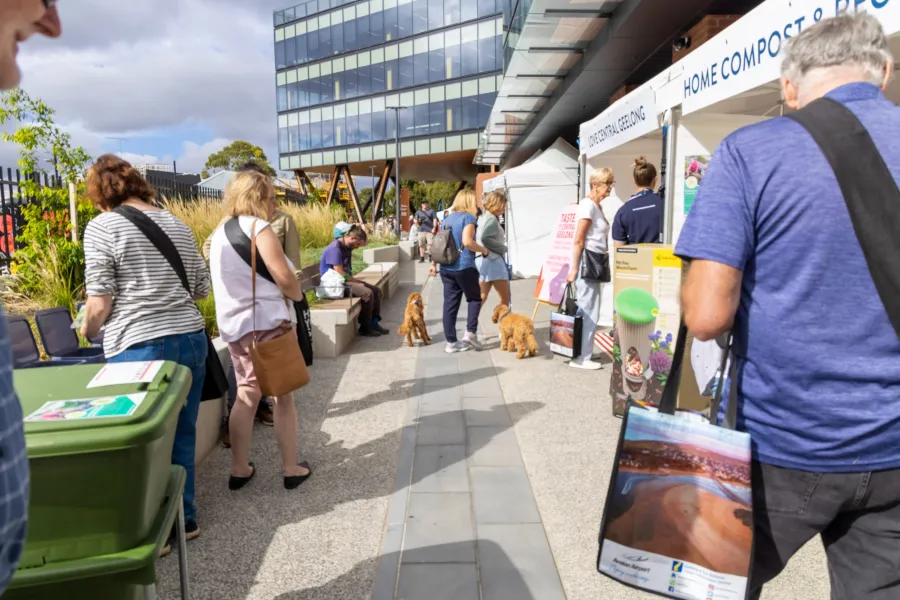
The greater the impact on the community, the more interactive the engagement will be. Our engagement opportunities will always be available online on our Have Your Say online engagement platform and promoted via our digital channels, including social media. We will also look for face-to-face opportunities whenever possible, including pop-up stalls, community drop-in sessions, workshops and forums and one-on-one phone conversations. When we're out in the community, we'll set up in a variety of locations across the municipality, places where people naturally spend time in their day-to-day lives, like shopping centres, parks, libraries, neighbourhood houses and local events. We will also seek opportunities to connect with people through the services we provide and by leveraging partnerships with community organisations that work closely with our community.
We will take reasonable steps to ensure that both online and in‑person engagement opportunities are welcoming, safe and respectful spaces, particularly for people who may face barriers to participation.
To allow enough time for the community to participate, engagement activities will be open for at least four weeks (with extensions encouraged if over school holidays or religious holiday periods), unless a City Executive Director approves a shorter timeframe or legislation requires a shorter period.
The table below identifies the IAP2 Spectrum of Engagement’s five levels of engagement, the goal, promise and role of community for each one, along with the types of engagement methods and examples of projects we may use for each one.
Level of Influence Inform Consult Involve Collaborate Empower Goal To provide the public with balanced and objective information to assist them in understanding the problem, alternatives, opportunities and/or solutions. To obtain public feedback on analysis, alternatives and/or decisions. To work directly with the public throughout the process to ensure that public concerns and aspirations are consistently understood and considered. To partner with the public in each aspect of the decision including the development of alternatives and identification of the preferred solution. To place final decision making in the hands of the public. Our promise to the community We will keep you informed. We will keep you informed, listen to and acknowledge concerns and aspirations and provide feedback on how public input influenced the decision. We will work with you to ensure that your concerns and aspirations are directly reflected in the alternatives developed and provide feedback on how public input influenced the decision. We will look to you for advice and innovation in formulating solutions and incorporate your advice into decisions to the maximum extent possible. We will implement what you decide. The role of community in decision-making Listen Contribute Participate Partner Partner or lead Examples of methods we will use to do this Fact sheets, brochures, flyers, newsletters, media, advertising media releases, displays at City facilities, website updates, social media. Briefings, surveys, meetings, workshops, Advisory Committees, pop-up events, interviews, information sessions and Town Hall meetings. Workshops, surveys, focus groups, interviews, tours of project site Advisory Committee workshops, roundtables, world cafes. Deliberative engagement processes including citizens juries, community panels and ballots, co-design workshops, steering groups, interviews, roundtables. Ballot or voting, deliberative engagement processes including citizens juries, community panels and ballots (subject to the remit). Examples of projects or decisions typical of this level of engagement Projects with no opportunity to influence decision- making, such as maintenance upgrades, roadworks and closures, rate changes, projects where the City is not the lead agency. Draft strategic plans or policies, Statutory projects such as land-use planning and hearing of submissions, low to medium impact interest projects, including single tree installations, small scale traffic projects, community-facing policies. Medium to high impact interest projects, such as major capital works, master plans, annual council budget, key strategies and plans, making of local laws High impact interest projects key strategic documents including the Community Vision, 4-year Council Plan, Asset Plan and Financial Plan. Council elections. Community Engagement Principles
- To ensure our engagement practices are proactive, inclusive, and meaningful - and to meet our obligations under sections 55 and 56 of the Local Government Act 2020 - we commit to the following:
- Plan proactively
- Identify stakeholders, including those directly affected and those with an interest in the issue.
- Start engagement early and continue it throughout the project to allow genuine input.
- Make sure engagement is timely, open, and easy to understand.
- Be inclusive and accessible and support participation
- Communicate clearly using plain language, accessible formats, and a respectful tone.
- Design engagement activities that are inclusive and accessible so people can contribute meaningfully. This includes:
- Physical accessibility – venues, transport, and facilities.
- Digital accessibility – screen readers, alt text, captions.
- Language support – translations and interpreters.
- Cultural sensitivity – approaches that are respectful and appropriate.
- Actively seek diverse perspectives, especially from underrepresented groups.
- Be transparent about influence
- Be clear about what aspects of the decision can be influenced (as well as what can’t be influenced and why), utilising the IAP2 Spectrum of Public Participation (refer to table on page 13.
- Define the community’s role in each engagement process.
- Identify what other factors, in addition to community engagement, will influence decision making (refer to the How decisions are made section on page 11).
- Choose the right engagement methods
- Use tools and approaches that suit the project, audience and level of influence, such as:
- Face-to-face conversations
- Workshops
- Surveys
- Online forums
- Pop-up events or community gatherings
- Reasonable support and incentives or stipends, where appropriate, to encourage and remove barriers to participation.
- Allow enough time for the community to participate
- Engagement activities will be open for at least four weeks (with extensions encouraged if over school holidays or religious holiday periods) unless:
- A City Executive Director approves a shorter timeframe, or
- Legislation requires a shorter period.
- Use tools and approaches that suit the project, audience and level of influence, such as:
- Provide feedback and keep improving
- Let the community know how their input has influenced decisions.
- Provide updates at key milestones throughout the project.
- Be flexible and willing to adjust our approach as needed.
- Learn from each engagement to improve future practices.
- Plan proactively
A submission review panel will be convened only where there is a statutory requirement under legislation that refers to section 223 of the Local Government Act 1989. In such instances, Council will conduct the process in accordance with the provisions of section 223 and in alignment with the engagement principles outlined in this policy.
- To ensure our engagement practices are proactive, inclusive, and meaningful - and to meet our obligations under sections 55 and 56 of the Local Government Act 2020 - we commit to the following:
- Deliberative engagement
Deliberative engagement is a way of working with our community that brings people closer to the decision makers. It involves people who broadly represent our Greater Geelong community. It focuses on deep, thoughtful conversation, often over several weeks or months and this process is usually used for more complex, long term and high impact issues, where perspectives are likely to differ and/or where the issue is high impact on sections of the community. Participants learn from different perspectives, work together, and shape well-informed advice that may influence decisions.
In this approach, participants are provided with:
- a clear task or question
- the information and resources they need
- enough time and space to discuss ideas and consider different perspectives to reach their consensus (or decision)
A promise of collaborate or empower on the IAP2 Spectrum of Public Participation.
Deliberative engagement methods include advisory committees, workshops, community panels, focus groups, citizen juries and ballots.
Not all our engagements can be deliberative however, at a minimum, we will engage deliberatively when developing the following long-term strategic documents in accordance with the Local Government Act 2020:
- Community Vision
- Council Plan
- Asset Plan
- Financial Plan
- other projects or initiatives as considered appropriate.
We will consider using deliberative engagement for other projects on a case-by-case basis. This means we’ll look at whether the issue is complex, whether involving the community at a more in-depth level would improve the outcome, and whether it could help build trust in decision-making. Where full deliberation isn’t practical, we may use a scaled-down approach that still values people’s time, supports meaningful input, and works within available resources.
- Managing feedback outside of formal community engagement channels
To ensure feedback is properly considered, we strongly encourage community members to use the designated engagement channels and submit input during the official engagement period. These formal channels are designed to support fair, accessible, and meaningful participation.
We recognise that people may also share feedback informally, such as through social media, emails, or in conversations with staff. While this type of input may be less structured and harder to verify, it can still provide useful insights into community sentiment and will be reviewed where possible.
However, feedback received informally or outside the engagement period may not always be included in formal reporting. When it is considered, it will be reviewed separately from formal input and will not be integrated into quantitative results.
Petitions will be managed under the City’s Governance Rules.
- How we will report on engagement
We will report back to the community
- At key milestones. This could include when an engagement opens, when an engagement summary is available, before a decision goes to a Council meeting, when the engagement closes and moved to another stage in the process.
- What we learnt during the engagement process – that is, the data and information collected as part of the process, including the key themes and insights heard from respondents and who we heard from.
- How this has influenced the decisions, plans and activities.
- What the next steps are.
We will report feedback accurately, including understanding nuances in feedback and investigating and highlighting anomalies in data, such as duplicate responses.
In determining the best ways to report this information back, we will consider the people and groups involved, barriers to engagement, and the level of interest to the wider community.
Where it is valuable to do so, we will report back during the engagement process, so that the methods of exploring an issue with the community might be altered based on what we are learning and that newly identified stakeholders might engage as necessary throughout the process.
We will report back using methods such as:
- updates on Geelong Australia website
- updates on the project Have Your Say page, including emails to ‘followers’ of individual pages
- posts on social media
- public notices and newspaper advertisements
- printed materials in community facilities
- Council meeting agendas and minutes
- direct communication, such as letters, phone calls and meetings, with the involved people and groups.
The City may use automated tools, such as AI, to help organise and summarise community feedback. These tools support analysis and reporting but do not replace people. City officers must review and understand community feedback to make recommendations to support Council’s decision making process.
The use of automated tools will be included in the privacy statement related to each engagement in line with the City’s privacy and data storage policies.
Implementation of this Policy
Responsibilities
The Greater Geelong community, our elected officials and all employees of the City of Greater Geelong play a role in ensuring the promises made in this policy are upheld.
| Group | Responsibilities |
|---|---|
| Community |
|
| Elected Members |
|
| Executive Leadership Team |
|
| City Officers |
|
| Community Engagement team |
|
Monitoring and reporting
The City commits to monitoring processes, information sharing and decision making to understand the overall level of success in the policy’s implementation. At a minimum, key evaluation measures of success over each 12-month period will be reported in the Annual Report and will include:
- community satisfaction with community consultation and engagement (annual survey)
- number of engagements
- number of participants
- adequacy of representation of priority populations
- percentage of deliberative and other engagements
- timeliness and regularity of reporting back to the community
and may also include measures such as:
- diversity of engagement methods
- information delivery modes
- effectiveness of participant identification process across target groups
Advice and assistance
The Responsible Officer is responsible for providing guidance on the application of this Policy.
Records
The City must retain records associated with this Policy and its implementation in accordance with its Records Information Management Policy.
| Record | Retention / Disposal Authority | Retention Period | Location |
|---|---|---|---|
| This policy | Manager, Community Strengthening | Four years | Geelong Australia |
| Feedback archives | Manager, Community Strengthening | Four years | Geelong Australia |
Review
The City should review and, if necessary, amend this Policy within four years of the Approval 26 May 2030.
References
Legislation
- Aboriginal Cultural Heritage Act 2006
- Charter of Human Rights and Responsibilities Act 2006
- Child Safety Act 2015
- Disability Act 2006
- Disability Discrimination Act (Com)1992
- Emergency Management Act 2013
- Equal Opportunity Act 2010
- Gender Equality Act 2020
- Local Government Act 1989
- Local Government Act 2020
- Multicultural Victoria Act 2011
- Planning and Environment Act 1987
- Privacy and Data Protection Act 2014
- Public Health and Wellbeing Act 2008
- Racial and Religious Tolerance Act 2001
- Victorian Charter of Human Rights and Responsibilities Act 2006
Other Documents
- Records Information Management Policy
Internal references
- Child Safe Standards
- Council Plan 2025-29
- Community Health and Wellbeing Strategy 2025-29
- Customer Strategy 2025 – 28
- Gender+ Impact Assessment
- Governance Rules
- Privacy and Health Records Council Policy
External references
- Victorian Local Government Act 2020 (Vic)
- International Association of Public Participation (IAP2) Spectrum of Engagement
- Waduwurrung Country Plan: Paleert Tjaara Dja, Let’s make Country good together 2020-2030
- Public Participation in Government Decision-making Better Practice Guide – Victorian Auditor-General’s Office 2015
- Public Participation and Community Engagement: Local Government Sector – Victorian Auditor-General’s Report 2017
- Public Participation in Government Decision-Making – Victorian Auditor-General’s Report 2017
- Victorian Government Draft Public Participation Framework (2020)
- Local Government Act 2020 – Principles Community Engagement (DELWP)