E. coli bacteria keep appearing in foods we sample from businesses. So, what is it and how does it get into our food?
Advise that your food or health business has closed Food allergens and intolerances for everyone Food classifications Food premises notification Food registration - principal Council Food registration at home Food registration fees Food safety Food Safety Newsletter Food Safety Programs Guidelines for Temporary Food Premises Mobile food registrations New food businesses Pay a food or health registration renewal Register a food, accommodation or health premises Rubbish storage Temporary and portable food premises Trade waste
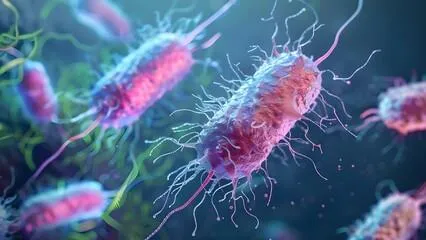
The full name is Escherichia Coli. The bacteria can be found naturally in the gut of humans and animals and on fruits and vegetables, particularly those grown in the ground that have been fertilised with manure.
The presence in foods is an indication of faecal (poo) contamination – either from the food handler, or from the foods they are using / preparing. It's presence in ready-to-eat food is unacceptable because it suggests:
- unhygienic food handling
- inadequate cooking
- lack of washing of salad ingredients
- and/or cross contamination that may have occurred during food preparation.
Recently there have been various outbreaks in Australia and overseas where E.coli has been the culprit. A variety of foods have been implicated, including unpasteurised apple and orange juices, sprouted seeds, fruit, salads, and meat products - especially undercooked minced meat patties/burgers.
3 ways to eliminate E. coli in your food
- Hand washing: Hands must be thoroughly washed with soap and warm running water after going to the toilet, and before and during preparing or serving food (refer to article on personal hygiene). Display the handwash sign and ensure you are using the hand wash sink for washing hands, not the food preparation sink.
- Heat: E. coli is easily killed by heating, so cooking food properly is a basic method of control. Minced beef, in particular, must be fully cooked. Milk and dairy products must be pasteurised.
- Washing: Ensure all fruit, salad and vegetables that are being left raw are washed to remove any traces of E.Coli that might have been present in the growing process, you don’t know what has been sprayed onto it, who picked the product, or any animals that have run through the paddock whilst it is growing.
It is strongly recommended that prewashed/ready to eat salads/vegetables are washed again.
Note: If fruit has a skin that needs to be cut to get the fruit (such as watermelon), wash the fruit first so E.coli is not transferred into the flesh of the fruit by the knife.
There have been various outbreaks where E.coli has been implicated both in Australia and overseas.
A wide variety of foods have been implicated in these outbreaks, including unpasteurised apple and orange juices, sprouted seeds, fruit, salads and meat and meat products, especially undercooked minced meat patties in hamburgers.
Petting zoos can also be a source of E.coli.
In this section
Advise that your food or health business has closed Food allergens and intolerances for everyone Food classifications Food premises notification Food registration - principal Council Food registration at home Food registration fees Food safety Food Safety Newsletter Food Safety Programs Guidelines for Temporary Food Premises Mobile food registrations New food businesses Pay a food or health registration renewal Register a food, accommodation or health premises Rubbish storage Temporary and portable food premises Trade wastePage last updated:
We are glad that you find this page helpful!
Submitting feedback... Please wait.
An error occured! Please try again.
Feedback submitted successfully!
Thank you for your feedback. We value your input and will use it to improve our services.