The City of Greater Geelong is committed to providing child safe physical and online environments where children and young people are safe, respected, valued and empowered.
Child Safe City
Child Safety is everybody's responsibility
We have zero tolerance for child abuse, harm, neglect, grooming and exploitation, and act in the best interests of children and young people at all times.
We recognise our responsibility to promote the safety, wellbeing, participation and rights of all children and young people.
We embed the Victorian Child Safe Standards throughout our services, facilities, programs, events and activities.
We have specific policies, procedures and training in place to support City workers to achieve these commitments.
The 11 Victorian Child Safe Standards work together to create environments where children and young people are safe, respected, empowered and protected from abuse and harm.
- Culturally Safe Environments – Aboriginal children and young people feel safe, respected and valued, and their cultures and identities are actively supported.
- Leadership, Governance and Culture – Child safety and wellbeing are embedded in leadership, governance, decision-making and organisational culture.
- Child and Youth Empowerment – Children and young people know their rights, participate in decisions affecting them and are taken seriously.
- Family and Community Engagement – Families and communities are informed and involved in promoting child safety and wellbeing
- Equity and Diversity – The diverse needs, abilities, backgrounds and circumstances of all children and young people are respected and supported.
- Suitable and Supported People – Staff and volunteers are appropriately recruited, screened, supervised and supported to uphold child safe practices.
- Child-Focused Complaints Processes – Children, families and staff can easily raise concerns, and complaints are responded to promptly and appropriately.
- Education and Training – Staff and volunteers receive ongoing training to build the knowledge and skills required to keep children safe.
- Physical and Online Safety – Physical and online environments are managed to promote safety and minimise opportunities for harm. .
- Continuous Improvement – Child safe practices are regularly monitored, reviewed and improved.
- Policies and Procedures – Policies and procedures clearly document how the organisation prevents, responds to and reports child safety concerns.
Together, these standards help organisations create and maintain a strong child safe culture where the safety, wellbeing and rights of children and young people are at the centre of all decisions and practices.
View the latest information regarding Child Safety on the Australian Children’s Education & Care Quality Authority (ACECQA) website.
Policies
Teach your child how to keep themselves safe
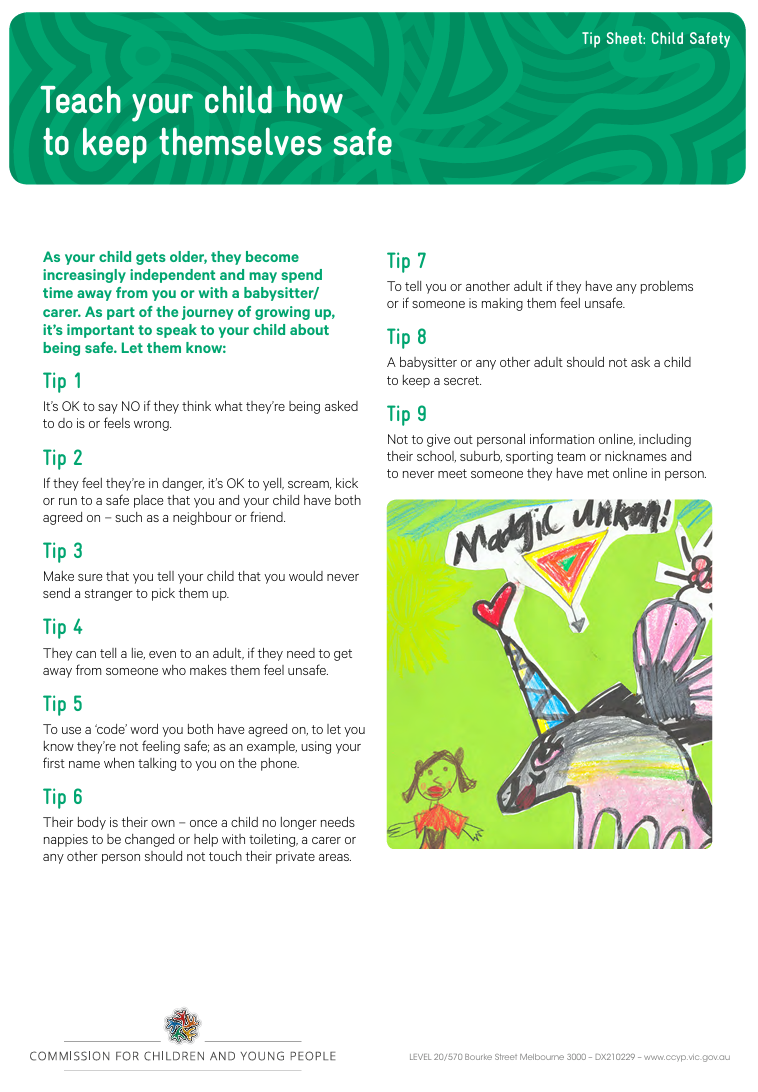
Teach your child to keep themselves safe
Resources for Families and Community
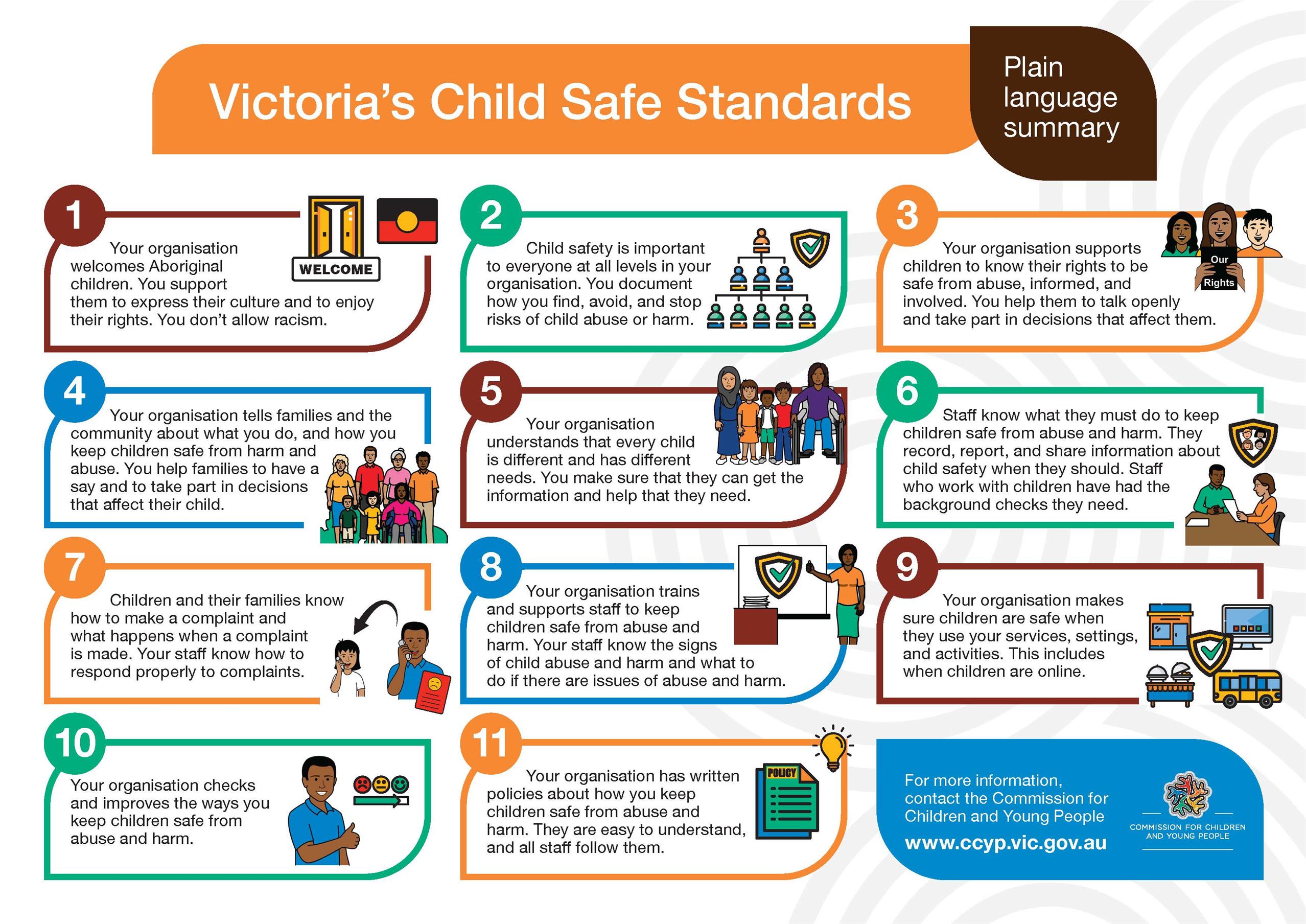
Victorias Child Safe Standards Plain Language Poster 10.02.2023
For more information regarding Child Safety see these websites
Page last updated: