Being waste wise starts with smart choices at the checkout, but it’s not always clear cut, like when it comes to choosing bin liners.
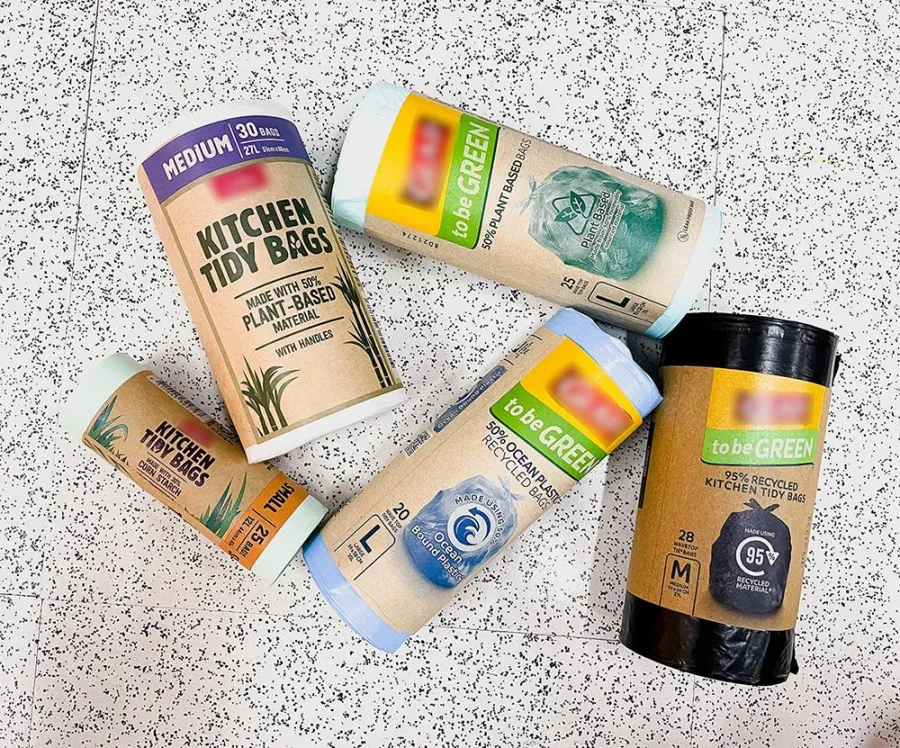
With words like compostable, biodegradable, recycled plastic and plant-based plastered all over packaging, it can be hard to know what’s actually best for the environment and what’s just greenwashing.
While breaking down the marketing promises is not as straightforward as we'd all like, we’ve tried to simplify it as much as possible for you.
Choosing the best bin liners
If you want to buy bin liners, here are our tips.
Red landfill bin
If it’s headed to landfill, opt for 100 per cent plant-based plastic (made from 100 per cent cornstarch) or 100 per cent recycled plastic, which are better than virgin plastics as they support the recycling industry.
Home compost bin
Compost works much better when there are no bin liners, as it allows the food scraps and garden waste to mix together, so the best option is to use none at all. Compostable liners may not always break down properly in a home compost bin.
As an alternative to liners you can use folded newspaper, but we know this isn’t always practical for everyone.
If using a liner, choose compostable liners that are:
- Australian certified home compostable, which display both AS4736 and AS5810 symbols
- 100 percent plant-based corn starch (not 50 percent or 25 percent)
- lime or light green in colour.
Bin liners are not accepted in Geelong's green garden waste or yellow recycling bins. Always empty items loose into these bins.
Bin liner materials - what do they mean?
Biodegradable plastics - not always a good thing
The term biodegradable is a bit hazy as technically everything is biodegradable. Even traditional plastics will be biodegradable, even though it could take decades or even centuries.
Biodegradable plastics can be made from all sorts of materials, from plants such as corn or sugarcane to petrochemicals. Some are made from oxo-degradable plastic, which has metal added, so when exposed to heat, it breaks down into smaller pieces of plastic. These microplastics are harder to clean up and cause all kinds of environmental issues.
Compostable - only if they're going to commercial compost facilities
Different to biodegradable plastic, where there’s no set timeframe for how long it takes to decompose, compostable plastic provides more specific details that under certain conditions (such as exposure to heat and moisture) it will break down into its basic elements (like carbon dioxide) within a certain timeframe (usually a number of months).
However, most compostable plastics need to go to commercial composting facilities in order to biodegrade as they provide higher temperatures and moisture levels than home composts. Whereas some are able to biodegrade in standard home composts.
So if disposed of in landfill, some compostable plastic can potentially have the same environmental impact as traditional plastic.
Furthermore, it's unclear whether compostable liners will be accepted when Greater Geelong rolls out Food and Garden Organic Bins from 2027, as the Victorian Government recently released draft standards that require compostable liners to stay out of FOGO bins. We should know more when the final standards are released later this year.
Recycled plastic
Each year, some 90 billion tonnes of primary materials are extracted to make plastic products, yet a mere nine per cent is recycled. That’s not to mention the eight million tonnes of plastic believed to be added to our oceans every year, or the 14 million tonnes of microplastics, which CSIRO estimates sit on the seafloor.
It’s a colossal problem that can’t be solved just by recycling, however there are benefits in treating all of this used plastic as a resource. Items made from recycled plastic reduce the need for more virgin plastics to be produced.
Want to read more stories like this? Sign up for our Rethink Your Rubbish e-news and receive updates every month.
Related information
Page last updated:
We are glad that you find this page helpful!
Submitting feedback... Please wait.
An error occured! Please try again.
Feedback submitted successfully!
Thank you for your feedback. We value your input and will use it to improve our services.