Pull out your Christmas list and check it twice with these tips to help you minimise waste during the silly season.
Tips for a low-waste Christmas
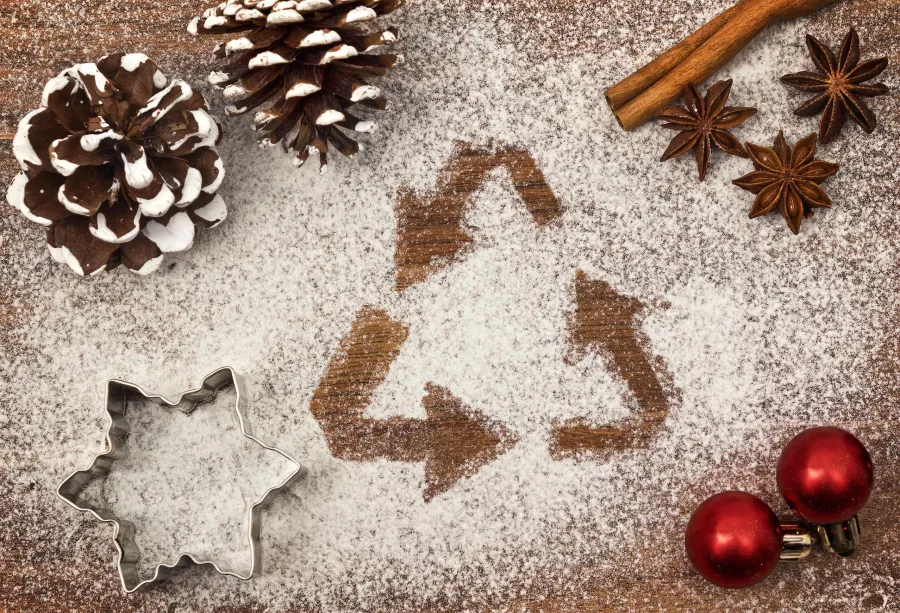
While Christmas can often be a time of excess, it doesn’t have to be that way. With a bit of pre-planning, you can enjoy this festive season without the inconvenience of overflowing bins on Boxing Day.
Here are some tips to help you get started.
Which Christmas tree is best for the environment?
While some prefer the convenience and guaranteed shape of a plastic Christmas tree, others prefer the smell of a real tree. But which is the best option for a low-waste Christmas?
The answer depends largely on what you plan to do with your tree after Christmas.
According to The Carbon Trust, if sent to landfill, each real Christmas tree emits around 16 kg of greenhouse gas while it breaks down. However, if composted this number is closer to zero.
So, if you are able, cutting your tree into smaller lengths and placing it into your green garden waste bin is a fantastic way to dispose of it. Some Christmas tree sellers also offer a free mulching service once you're ready to dispose of it.
If buying a new tree each year is too expensive, or you can't stand the thought of cutting down trees, consider purchasing a potted Christmas tree from your local nursery: one tree will help you celebrate for many years to come. Alternatively, you might consider simply using pruned branches from your own garden.
If you already have a plastic Christmas tree, don’t despair! Your best option is to keep reusing it for as long as you can - the average artificial tree needs to be used 15 times to offset its emissions. If it starts to look too old and tired, go online for tips on how to spruce it up using materials such as replacement foliage, tinsel, and even real branches!
The same goes for if you can't resist buying a new imitation Christmas tree - take the time to find one you will love for years to come.
Tis the season…for food waste
Wasted food is a big problem in Australia, which is why we’ve devoted a whole article to the topic of minimising Christmas food waste.
Beyond the food itself, you should also look to minimise packaging waste wherever possible.
Cooking from scratch where you can and sourcing ingredients from businesses that wrap produce in paper, or allow you to use reusable containers is a great way to reduce packaging waste.
If you don't have time for this, don't despair, you can still reduce packaging waste by choosing packaging that is recyclable, or made from recyclable materials. Learn more about choosing recycled at the checkout.
For those more inclined toward a BBQ at the beach than a sit-down dinner, use reusable plastic dinnerware instead of single-use items, or choose uncoated cardboard that can go into your compost bin.
Read more about what you can do to minimise soft plastics while recycling services are on hold.
Sustainable gift-giving
There are plenty of low-waste ways to share the joy of gift giving with your loved ones:
- Consider edible gifts, such as baked treats or preserves. You can even package them in a reusable container such as a lunchbox or reusable cup.
- Give the gift of memories with a voucher for an experience. Great memory making gifts could be a visit to an animal sanctuary, a day spa or lessons in a new skill or hobby.
- Try presents that can replace single-use items, such as reusable coffee cups and reusable shopping bags.
- Try propagating plants and replanting them in reused pots as gifts.
- Check Facebook Marketplace and Gumtree for the items on your list before heading to the shops.
- Make vouchers that commit the giver to helping with household tasks both big and small, like a garden clean-up.
- Donate money to a local charity or a cause.
- Consider re-gifting unwanted presents from previous years.
Sustainable wrapping paper ideas
Single use wrapping only lasts only as long as it takes to open the gift, but giving a gift in a re-useable bag, tea towel or scarf, is wrapping that that can be used long after the gift is unwrapped. It’s also a double present! For ideas, look up a Japanese technique called Furoshiki, which involves wrapping presents using squares of fabric.
You can also wrap with reused paper, gift bags, or paper made from recycled materials.
How to avoid plastic wrapping paper and sticky tape
While true cellophane is another great option, as it is completely biodegradable and compostable, most store-bought cellophane is plastic-coated and should therefore be avoided.
Learn how to tell the difference between true cellophane and its plastic-coated form by watching this helpful video.
While sticky tape will be removed from wrapping paper during the recycling process, there are plenty of online tutorials with directions on how to wrap presents without it. Reuse old ribbon, or choose twine made of natural fibres, which can later be composted.
If you have any low waste Christmas tips you would like to share, we would love to hear from you! Email us.
Want to read more stories like this?
Sign up for our Rethink Your Rubbish e-news and receive monthly updates.
Related information
Page last updated:
We are glad that you find this page helpful!
Submitting feedback... Please wait.
An error occured! Please try again.
Feedback submitted successfully!
Thank you for your feedback. We value your input and will use it to improve our services.