Heritage Information Sheet - Additions
Prepared by Authentic Heritage Services Pty Ltd
Before deciding on any change to a heritage place, its cultural heritage significance needs to be understood. Recognising the cultural values of a place will assist in identifying the opportunities for change and will help to avoid any potential conflicts between heritage values and the proposed addition. The following gives some illustrated examples on the different types of additions, expanding on the City of Greater Geelong Heritage and Design Guidelines 1997.
Buildings are three dimensional entities and their forms, constructions, chimneys, windows and doors and other details are part of their significance. Ultimately, any additions to a heritage place need to meet the purpose of the heritage overlay outlined at Clause 43.01 of the Greater Geelong Planning Scheme which is to:
- implement the Municipal Planning Strategy and the Planning Policy Framework.
- conserve and enhance heritage places of natural or cultural significance.
- conserve and enhance those elements which contribute to the significance of heritage places.
- ensure that development does not adversely affect the significance of heritage places.
Rear additions
Most applications for additions to heritage buildings are for rear locations, as these locations allow the retention of the significant three - dimensional form and character and appearance of the building when viewed from the front.
Most of the Heritage Design Guidelines (Incorporated Documents in the Planning Scheme) encourage the retention of front and side setbacks and building separation.
Unless specified in a statement of significance or policy for the heritage place (individual property or heritage area), the rear yard of a property is the most ideal location for additions, even where the new work is substantial.
From a heritage point of view, boundary to boundary development might also be possible at the rear if there are only incidental views of the new work from the public realm and where side setbacks are a predominant characteristic at the front (that is side setbacks are retained for most of the existing building).
While most of the Heritage Design Guidelines promote traditional hipped and gabled roof forms to match existing buildings, it is important that new work is distinguished from the existing significant fabric.
As outlined in The Burra Charter the Australia ICOMOS Charter for Places of Cultural Significance 2013 (a policy guideline in the Planning Scheme) 'imitation should be avoided' yet any new work 'must respect and have minimal impact on the cultural significance of the place.' The Australia ICOMOS Practice Note on New Work goes further, outlining that 'being readily identifiable does not automatically make new work sympathetic to the place.'
Ultimately, new work should respect the scale, strength, character of the heritage asset, and public views to it, and not overpower it.
The City of Greater Geelong Heritage and Design Guidelines provide details on how rear additions need to be considered by being based on viewing lines in plan and elevation. The type and extent of addition proposed will be dependent on these views and the streetscape context.
There are a range of options that may be considered in designing rear additions including (but not limited to):
Designs which reflect the roof forms and massing of the existing dwelling but in a contemporary way. These proposals often accord with heritage policy.
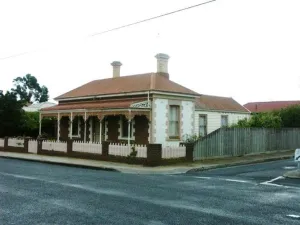
Victorian house with rear single storey additions
Source: Dr David Rowe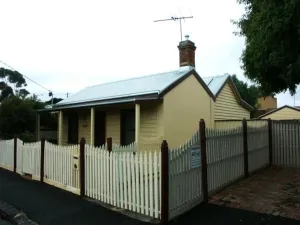
Victorian gable with rear gabled additions to reflect the original roof
Source: Dr David Rowe
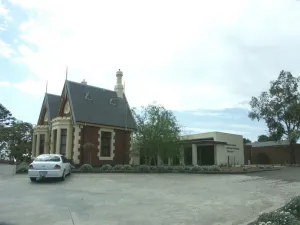
2. Designs that are separate from the existing heritage buildings and which are connected through narrow links. These types of proposals allow for the retention of the existing three dimensional form of the building, particularly where the addition is of equal or larger size.
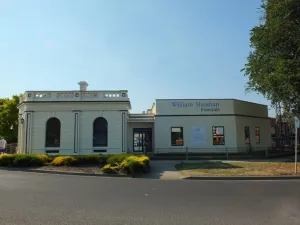
3. Designs which may be more independent in appearance that are largely not visible from the street and do not overwhelm the existing architectural style.
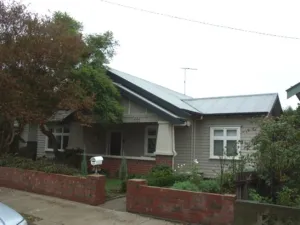
If the new work is not visible from the street and also retains the integrity of the heritage place, any adverse affect will be minimal. If the new work is visible but subservient (smaller) in scale and constructed with some sympathy in materials to the heritage place, then no adverse affect on significance might also be the result.
 Source: Dr David Rowe. | 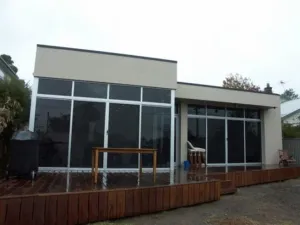 |
_____________________________
1 An adverse affect is a negative impact on the heritage place. The term adverse affect is used in the Planning Scheme, particularly in the Decision Guidelines at Clause 43.01-8.
2 See the City of Greater Geelong Heritage and Design Guidelines 1997 which gives an understanding about subservient proportions.
Other Locations
One of the considerations for additions that are not at the rear of the building is the site context, and that the heritage building remains the prominent feature.
Retaining the visual strength of the heritage place by ensuring that the additions are subservient in proportion, recessive from the front and complement the forms and character of the heritage asset will be critical to the success of the proposal.
Seamless rear additions
Seamless extensions have the potential for an adverse affect on the significance of the heritage place as they undermine the three dimensional integrity of the significant building composition (extent and forms). The additions are not distinguished (either subtly or noticeably) from the existing.
Measures that may be considered as the most subtle means of distinguishing old from new are:
- Setting down the roof ridgeline to enable a principal rear and/or side roof ridgeline to be retained (particularly if visible from the street). This virtually creates a double ridge, the newer ridge being slightly lower.
- Providing a slightly shallower roof pitch to the form of the rear addition compared to the existing.
Ensuite additions
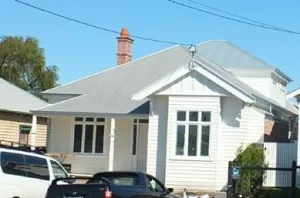
It is rare for an ensuite to be successfully added to the side of a front portion of a heritage dwelling without it being noticeable.
Ideally, ensuite additions should be as recessive from the front of the dwellings as possible (one room in depth) and at the very least setback least one metre from the main front wall plane as well as at least one metre from the front wall plane of the immediately neighbouring dwelling. The latter might be possible where the ensuite addition may be partially disguised by a closely adjacent neighbouring dwelling.
Consideration should also be given to connecting the ensuite addition under the existing significant eaves so that the integrity of the existing eaves can be retained.
Attic additions
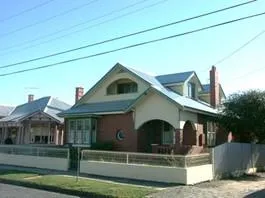
Given the broad and steep roof forms of a number of heritage houses, attic additions can often be successfully integrated without overwhelming the original style of the house.
The construction of minor projecting architectural elements in the form of attic dormers or attic windows can often provide a successful design solution for the need for more space without greatly compromising the existing character and appearance of the house.
The most successful attic additions are where any projecting dormer windows are located on the rear or side roof faces.
Two storey additions
Most of the Heritage Design Guidelines encourage single storey building heights. Yet, the Planning Policy Framework (clause 15.03-1L) states that development should be consistent with the City of Greater Heritage and Design Guidelines (1997).
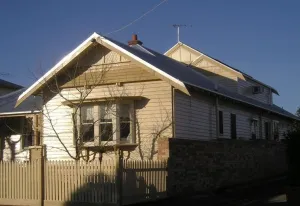
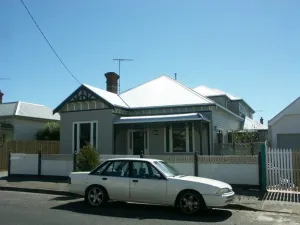
The Heritage and Design Guidelines indicate that the most successful two storey additions are designed where the front three-dimensional form, scale, bulk, massing and details of the existing heritage house are retained as the dominant features, with the new work being highly recessive from the front and also from the sides of the existing building (where the additions are above the rear of the existing building).
In particular, the Guidelines state:
- The second floor addition must not dominate the existing building. The building is significant because of its existing character and this should not be overwhelmed.
- The second storey additions must be sited well back from the street facade. This should be a distance of about five metres, or back to a transverse ridge line or intersecting gable.
- A set back from the side walls of the existing building is also required. This creates subservient proportions for the second storey.
- The roof form of the addition should match the existing. Getting the pitch and the roof cladding material to match are essential. The complexity of the form of the addition should also match the existing building.
- Materials and finishes for additions should reflect the existing building. It is not always necessary to copy the existing.
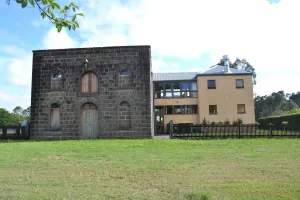
Successful examples are:
 |  |
Dominant two storey additions
Unsuccessful examples are where the additions are noticeably dominant because of their location towards the front, larger scale or highly visible form.
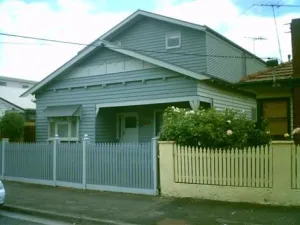
Independent two storey additions
Although distinguishing old from new is a valid heritage principle, it needs to be considered in relation to the context of the heritage place. New work does not have to be ‘in keeping with the character and appearance of the heritage place’ if no adverse affect on its significance will result.
This is usually where the addition is not visible to public view (if the significance of the heritage place relies on its existing scale, forms and construction) and where the integrity of the heritage place will not be diminished.
Independent two storey additions:
- Should be designed as separate entities to minimise views from the public realm (principal streets).
- Generally should not be constructed directly above the heritage dwelling as this often leads to the addition being visually prominent. Any components above the rear portion of a dwelling might consider a more conservative “transitional” approach or at least be set in from the side wall plane of the heritage dwelling.
- Should be constructed of materials and tones that minimise visual prominence.
- Avoid the same roof and wall construction where especially visible to public view (traditionally, dwellings were constructed of roofing materials different to the wall cladding, there being a break by eaves).
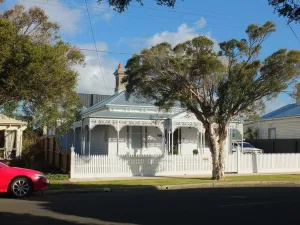 | 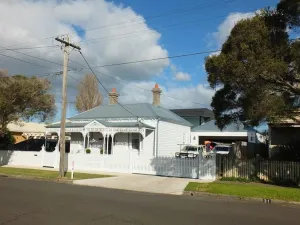 |
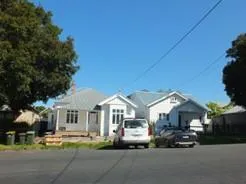 |  |