This guide aims to assist you to understand the steps you need to take to register your child in our 3 year old and 4 year old sessional kindergarten programs.
Kindergarten Registration
Child Safe Organisation
The City of Greater Geelong is a Child Safe Organisation. We have a zero tolerance for child abuse of any kind and take our responsibility for the safety and wellbeing of children seriously.
"Best Start, Best Life" Kindergarten reforms.
The Victorian Government's "Best Start, Best Life" Kindergarten reforms aim to bring significant changes to early childhood education over the next few years. These reforms are designed to:
- Enhance early childhood education by transitioning Four-Year-Old Kindergarten to Pre-Prep, providing 30 hours of play-based learning per week for all four-year-olds by 2033
- Make early childhood education more accessible to families.
- Improved Learning outcomes for children
- Support for families with cost-of-living pressures and supporting parents in returning to work or study if they choose
The transition is being implemented in a staged approach. Currently, all children enrolled in a 4-year-old kindergarten program operated under the City of Greater Geelong Early Years Management receive 15 hours of free kindergarten. Additional Hours of 4-year-Old Kinder (Pre-Prep) launched for children from priority cohorts statewide in 2026.
The priority cohorts include:
- Aboriginal and Torres Strait Islander children
- Children from a refugee or asylum seeker background
- Children who have had contact with Child Protection services
- Children who were supported by Access to Early Learning and Early Start Kinder (ESK) during their three-year-old year of kindergarten
Eligible children can access between 16 and 25 hours of funded kindergarten per week.
The number of additional hours offered will vary at each service to meet kindergarten service delivery requirements, constraints and community demand. The City of Greater Geelong is collaborating with the Department of Education and other local kindergarten providers to ensure that every child can access a kindergarten place.
It is important to note that the increase in hours does not apply to three-year-old kindergarten.
Expressions of Interest for 2026 and 2027 Kindergarten are now open.
You must do a separate EOI for each child you are registering.
Enrolling in Kindergarten
It is important for families to understand that the age at which their child begins kindergarten is directly linked to when they will start primary school. Families are encouraged to take a range of factors into account when deciding on enrolment in three-year-old kindergarten.
You and your child are welcome to visit any of our centres during the process. This is a great way to:
- Get to know the centre
- Learn more about the specific kindergarten programs available.
We look forward to helping you find the right place for your child!
Step 1: Expression of interest form submitted by families
To register your interest in enrolling in one of our kindergarten programs, you are asked to complete an expression of interest (EOI) form.
You must do a separate EOI for each child you are registering. Please take note of the registration number that appears on your screen at the end of the EOI process for further reference.
The EOI form allows families to nominate up to two centre preferences for their child/ren. Session times will be decided based upon demand.
Step 2: Allocation process
Once the form is received, we offer places to families based on the following Priority of Access criteria, as determined by the Victorian Kindergarten Guidelines Criteria:
Tier 1 Criteria:
- Children at risk of abuse or neglect, including children in Out-of-Home Care
- Aboriginal and/or Torres Strait Islander children
- Asylum seeker and refugee children
- Children and/or families holding concession cards
- Children from families with multiple births
- Children accessing an additional year of Three- and Four-Year-Old Kindergarten or Pre-Prep
- Children and/or families with additional needs who require additional assistance to fully participate in the kindergarten program. Defined as;
- is eligible under the National Disability Insurance Scheme (NDIS) or undergoing a continuing assessment of a disability under the NDIS
- is eligible for Early Childhood Intervention Service Continuity of Support (ECIS COS)
- is diagnosed with a disability or developmental delay or are undergoing diagnosis
- presents with developmental concerns that presents barriers to accessing a kindergarten program (supported by a letter or other evidence from a MCH nurse or similar practitioner such as an allied health practitioner)
Or the child has previously accessed:
- the Kindergarten Inclusion Support Program, Commonwealth Inclusion Support Program or another similar program
Or the Child is Referred by;
- the National Disability Insurance Scheme
- Early Childhood Intervention Service Continuity of Support (ECIS COS)
- Preschool Field Officer program, or
- MCH nurse or similar professional such as an allied health specialist, where developmental concerns have been identified.
Parent or Carer;
- holds a Disability Health Care Card.
- is eligible under the National Disability Insurance Scheme or undergoing a continuing assessment of a disability under the National Disability Insurance Scheme (supported by a letter from a medical practitioner or specialist)
- has complex medical needs that present barriers to accessing a kindergarten program (supported by a letter from a medical practitioner or specialist)
Tier 2 Criteria:
- Children currently attending the service
Places are first allocated to children who meet one or more of these criteria.
The ‘priority of access’ criteria used are in line with Victorian Government requirements regarding how kindergarten places must be allocated to children. It works to ensure that:
- a transparent, equitable and approved process is followed
- the maximum number of children receive a kindergarten place
- children who are eligible for priority places are allocated a place in their kindergarten of choice
We have a strong commitment to ensuring that, wherever possible, all children are allocated a place in one of our programs. We cannot, however, guarantee a kindergarten place to every child.
Step 3: Letters of offers are sent
Once the allocation of places has been completed, families are notified in writing of the place that has been offered to their child, in a particular group, at one of our centres (including the session times for that group).
Wherever possible, this offer will be made via email.
Ensure you continue to check your emails including your junk mail, for this offer.
Step 4: Offer is accepted by family
You are required to make contact with us to accept or decline the offer by the required date.
If you do not respond to an offer by this date, the place will be re-allocated to another child.
Step 5: Enrolment process
Following your acceptance of the offer, the administration team will guide you through the enrolment process and provide you with the necessary information at a later date.
Please keep us updated with any changes to your contact details or any information that may be relevant to the registration process.
Please contact us if you are in need of an interpreter to support you with completing the registration process.
Phone; 03 5272 4741
Email [email protected]
Under the ‘No Jab, No play’ legislation that came into force on 1 January 2016, children are required to be fully vaccinated for their age before they can be enrolled in a kindergarten program.
Our centres are, therefore, required to obtain evidence that your child is fully immunised for their age, is on a vaccination catch-up program or is unable to be fully immunised for medical reasons.
You will be required to provide immunisation evidence twice per year.
Conscientious objection is not an exemption.
Registration and Enrolment Timeline
| Date | Action |
|---|---|
| Wednesday 28 January 2026 | Expressions of Interest open |
| Monday 15 June 2026 | First round Expressions of Interest for 2027 close |
| Monday 13 July 2026 | First round offers for 2027 emailed to families |
| Monday 20 July 2026 | First round acceptances for 2027 due back |
| Second round Expressions of Interest for 2026 close | |
| Tuesday 21 July 2026 | Online portal remains open for ongoing Expressions of Interest for Kindergarten 2027 |
| Monday 27 July 2026 | Second round offers for 2027 emailed to families |
| Monday 3 August 2026 | Second round acceptances for 2027 due back |
| Monday 3 August 2026 | Online portal remains open for ongoing Expressions of Interest for Kindergarten 2027 |
A new, simpler way to register for kindergarten is coming in 2027. Connecting families to sessional kindergartens across Geelong with one simple, streamlined enrolment system.
FAQs
We are committed to working with families to ensure that, wherever possible, all eligible children have access to our high quality kindergarten programs. This process gives families the opportunity to nominate their preferences for both three and four-year-old kindergarten places at our eight different centres.
We aim to ensure that children have access to programs in their local area and that the allocation of places is fair and equitable for all children and their families.
Give your child the best start.
The Victorian Government is investing in kindergarten programs for all three-year-olds giving our children an extra year of learning, playing and making friends. Funded kindergarten programs for three-year-olds are being rolled out in Geelong from 2022.
Kindergarten is an important part of young children’s growth and development and attendance is strongly recommended for all children. Attending kindergarten improves children’s health and wellbeing, supports their development, helps them to develop strong social skills and encourages a love of learning.
Children who go to a kindergarten program are more likely to be independent and confident and to make a smooth transition to primary school.
Our high-quality kindergarten programs will offer your child a range of learning experiences and activities that are both stimulating and fun. Your child’s learning and curiosity about their world will be encouraged through different experiences and activities, such as exploring the natural world, being exposed to new ideas and solving problems.
Your child will have the opportunity to:
- develop their social and communication skills by forming relationships and friendships with other children and taking part in group activities and cooperative play
- express their creativity through dance, music and art
- increase their independence and develop an identity that is strong in culture and community
- develop the skills and knowledge that they need for reading, writing and mathematics
- increase their problem-solving skills and their understanding of the world around them.
Kindergarten is for all children and is inclusive of all children. If your child has a disability or needs additional help with their learning and development, the educators will work with you to ensure that the program and learning environment meet the needs of your child.
Some of our centres also include bush and beach kindergarten sessions, so that children learn to care for and learn from the natural world around them.
We offer sessional and integrated (long day care) kindergarten programs to suit different family needs. All programs are led by a qualified Early Childhood Teacher.
The key differences are hours and fees:
- Sessional kindergarten runs during school terms for set hours and is free for three- and four-year-olds.
- Integrated kindergarten operates up to 50 weeks per year with full-day care options and is subject to long day care fees, with Child Care Subsidy available.
To enrol, join the waitlist via My Family Lounge for integrated programs, or use our central registration portal for sessional kindergarten.
Children born between January and April can choose which year to start three-year-old kindergarten. These children can start in the same year they turn three, or in the year they turn four years of age. Due to staffing requirements, children can only start attending kindergarten after their third birthday. This will mean that some children will not start attending the kindergarten program until part-way into term one.
Children that will turn six in late December (between the last day of the school year and 31 December), can attend four-year-old kindergarten in that year and attend school the following year.
When a child starts at kindergarten directly relates to the age they will start at primary school. Please speak to the Service’s kindergarten teachers and other Early childhood professionals such as your Maternal child health nurse, family doctor, allied health professional or Centre Manager directly about the best time for your child to start at three-year-old kindergarten.
The following table provides a general guide to when children are eligible to attend a sessional program:
| Date of birth | three-year-old kinder | four-year-old kinder |
|---|---|---|
| 1 May 2022 – 30 April 2023 | 2026 | 2027 |
| 1 May 2023 – 30 April 2024 | 2027 | 2028 |
| 1 May 2024 – 30 April 2025 | 2028 | 2029 |
| 1 May 2025 – 30 April 2026 | 2029 | 2030 |
| 1 May 2026- 30 April 2027 | 2030 | 2031 |
For further information regarding when to start kindergarten please visit the Kindergarten - Best Start, Best Life website.
Four-year-old kindergarten is a one year program for young children delivered by a qualified early childhood teacher in the year before they begin school.
The Victorian Government provides funding to services to contribute to the cost of running a funded program.
All children are eligible to access a funded kindergarten program for 15 hours per week for 40 weeks (or 600 hours) in the year before commencing school.
Families can only access Government funding for one kindergarten program at a time and cannot have previously accessed a funded place.
From 2026, across Victoria, children who meet the eligibility requirements due to their learning or developmental needs can access an additional year of either Three-Year-Old Kindergarten or Four-Year-Old Kindergarten (or Pre-Prep for eligible children), but not both.
The Early Childhood teacher and the child’s parents, carers or legal guardians will work together to plan for the child’s transition to school.
In exceptional circumstances where a child is observed to display delays in key outcome areas of learning and development, a second year of either funded Three-Year-Old or Four-Year-Old Kindergarten may be considered in the best interest of the child:
- the kindergarten program is deemed to be the most appropriate learning program and environment for that individual child
- the child will achieve better outcomes at kindergarten than if they go to school.
More information for parents, carers and legal guardians about the assessment process can be found here.
A funded second year of kindergarten will only be available for children who meet the above criteria.
If a child will turn six before or while they are in a funded kindergarten program, parents, carers or legal guardians must get an exemption from starting school.
Why is Kindergarten for three-year-olds important?
At kindergarten, children learn key skills, including creative thinking, social and emotional skills, and early literacy and language skills. Research shows that 2 years of kindergarten are better than one, helping prepare children for success at school and for life.
Three-Year-Old Kindergarten has been introduced across Victoria, which means families can now access two years of government-funded kindergarten for their children before they start school.
Kindergarten programs are for all children. If your child has a disability or learning difficulty, the educators will talk with you about how the program and environment can support your child.
Families with children born between January and April can choose which year to start at Three-Year-Old Kindergarten. These children can start in the same year they turn three, or in the year they turn four years of age. Due to staff requirements, some services may ask that children start attending at kindergarten only after their third birthday. This may mean that some children may not start until part-way into Term 1 and have less time overall as part of a Three-Year-Old Kindergarten program, in comparison to their peers.
If this is the case for your child and you accept a place, kindergartens will hold your child’s place until they are old enough to attend.
When your child starts at kindergarten directly relates to the age they will start at primary school. When enrolling at Three-Year-Old Kindergarten, we encourage families to plan ahead and consider the age they would like their child to start at school.
What is Early Start Kindergarten?
Early Start Kindergarten provides up to 15 hours of free kindergarten per week to eligible three-year-old children where programs are offered by a qualified teacher.
Is my child eligible?
To be eligible, your child must be 3 by 30 April in the year they start kindergarten and meet one of the following criteria:
→ are from a refugee or asylum seeker background, or
→ are Aboriginal and/or Torres Strait Islander, or
→ have had contact with Child Protection, including children in out of home care.
Please contact us if you are unsure whether to enrol your child in the three-year-old or four-year-old program.
What is Access to Early Learning (AEL)?
AEL is a targeted program for three-year-old children from families with complex needs. It aims to make sure that these 3-year-old children get the full benefits of attending a quality kindergarten program.
Eligibility
Children are eligible for AEL if they are referred by:
Enhanced Maternal and Child Health (Enhanced MCH) service
Child and family services
The Orange Door or a Child Protection professional.
Referrals can be made for children from families with two or more complex needs, including:
contact with Child Protection
child and/or parent/carer with disability
family violence
mental health issues
sexual trauma
alcohol and drug abuse.
AEL links families with an AEL facilitator to provide extra support to help enable regular attendance and access to 15 hours per week of free kindergarten.
An AEL facilitator:
proactively engages with services working with families, to identify if they are eligible for AEL
actively reaches out to children and families to understand the barriers that may prevent a child from fully taking part in a kindergarten program
if the child is not engaged in early learning, prepares the family and service to make a successful introduction to kindergarten
develops tailored ways that the family and service can support the child to take part at kindergarten
visits the family’s home regularly to help with home-learning activities, and builds families' understanding, confidence and skills to help with their child’s development and learning
observes and addresses children’s needs through meetings and discussions with families and educators
helps the family to engage with other services and supports as needed
provides kindergarten educators with support for reflection and coaching to strengthen inclusive, collaborative practices
provides kindergarten educators with access to additional training, where needed
supports children’s transition to the following year of kindergarten
The collection and handling of personal information is carried out in accordance with our Privacy Policy.
We welcome feedback on the kindergarten registration process. We also recognise the right of families to complain if they are feeling dissatisfied or unhappy with the process.
If you would like to provide us with feedback about your experiences or have concerns about the registration process, please contact us.
Priority of access parent brochure

Drop off 
High Five 
Lockers 
Group paint time 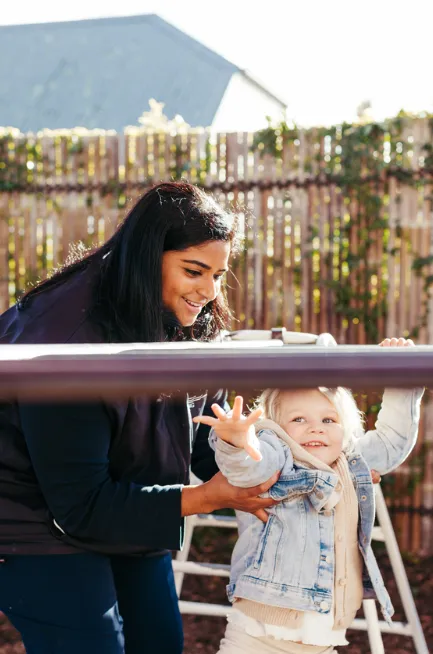
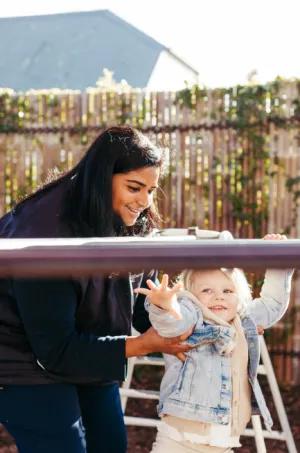
Monkey bars 
Cooking





Click on an image to view details and enlarge
Contact
force display
Page last updated: