This plan has been informed by Australian and Victorian Government legislation and policies, as well as regional efforts to control invasive species.
RCP - The bigger picture
It aligns with the community-led clever and creative vision, our 2018-2022 Council Plan and other relevant corporate policies and strategies. Its content has been guided by expert advice on managing rabbits and community expectations.
Who’s responsible for rabbit control?
Under the Catchment and Land Protection Act 1994 all landowners are required to take all reasonable steps to control rabbits on their land. The City identifies priority sites and allocates resources to control rabbits through our annual rabbit control program.
Effective rabbit control over the long term requires an integrated control program with neighbouring landowners all working toward the goal of eradication.
This is why we are committed to adopting a whole-oflandscape approach to rabbit control – that is, seeking to collaborate with our neighbours and other stakeholders to achieve prolonged benefit across larger areas.
The key stakeholders involved in rabbit control are:
- Agriculture Victoria – the lead agency responsible for pest animal legislation oversight and enforcement
- the Corangamite Catchment Management Authority – supports land managers and environment groups by giving grants to support on-ground pest plant and animal removal
- Government agencies and committee's of management – these include Parks Victoria, Barwon Water, Regional Roads Victoria, VicTrack, Barwon Coast, Bellarine Bayside and others
- key support and advisory groups – the Victorian Rabbit Action Network (VRAN) and the Rural and Peri-Urban Advisory Committee
- special interest groups – regional Landcare, environmental, ‘friends of’ and other volunteer groups
- Wadawurrung Traditional Owners Aboriginal Corporation
- private land owners.
Table 1 Legislation and policy guiding rabbit control in the City of Greater Geelong
| Level | Legislation and policy |
|---|---|
| Federal | Agricultural and Veterinary Chemicals Code Act 1994 |
| Australian Pest Animal Strategy 2017-2027 | |
| Environment Protection and Biodiversity Conservation Act 1999 | |
| State | Aboriginal Heritage Act 2006 |
| Agricultural and Veterinary Chemicals (Control of use) Act 1994 | |
| Biosecurity Strategy for Victoria | |
| Catchment and Land Protection Act 1994 | |
| Drugs, Poisons and Controlled Substances Act 1981 | |
| Flora and Fauna Guarantee Act 1988 | |
| Invasive Plants and Animals Policy Framework | |
| Local Government Act 1989 | |
| National Parks Act 1975 | |
| Planning and Environment Act 1987 | |
| Prevention of Cruelty to Animals Act 1986 | |
| Wildlife Act 1975 | |
| Protecting Victoria's Environment - Biodiversity 2037 | |
| Regional | Corangamite Regional Catchment Strategy 2013-2019 |
| Local | Biodiversity Strategy 2004 |
| Environment Management Strategy 2020–2030 | |
| Greater Geelong: A Clever and Creative Future | |
| The City of Greater Geelong Council Plan 2018–2022 |
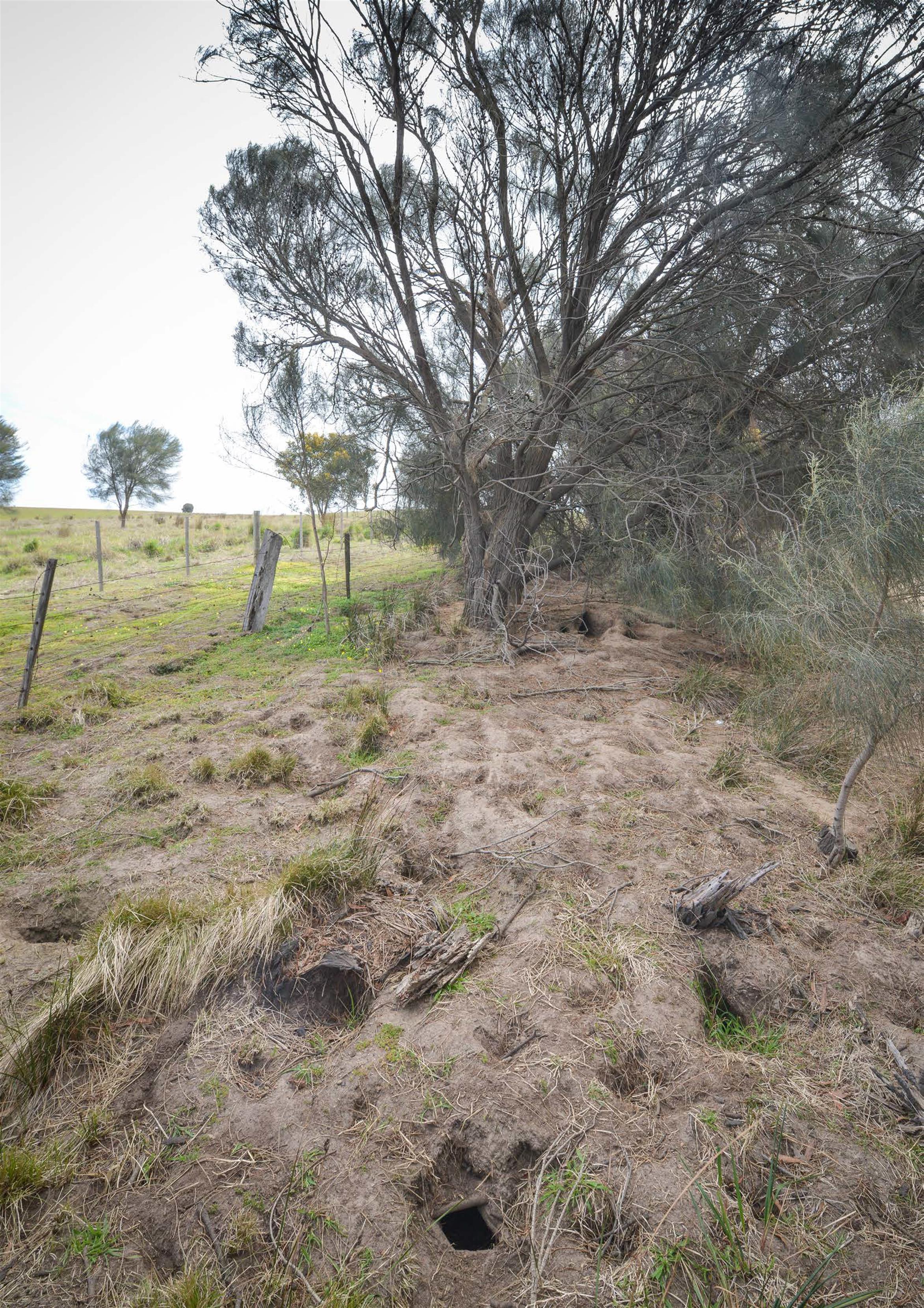
Figure 7: Rabbit damage along Knights Road, Mannerim one of the most rabbit infested locations in the municipality.
“Breeding like rabbits”
Rabbits are rapid breeders and a single pair of rabbits can increase to 184 individuals within 18 months.
Rabbits mature at 3–4 months and continuously breed as long as green feed is present. The gestation period is 28–30 days and the average litter size is four to six kittens. Female rabbits (doe) are fertile immediately after giving birth and mating often occurs within 0.5 to 2 hours after giving birth. A doe can average 28 kittens per year (DEDJTR 2018).
The spread of rabbits into new territories is related to dominance hierarchies in rabbit social groups. Young rabbits are pushed away from the burrow before they are two months old and forced to find a new home.
The spread of rabbits is therefore a social behaviour that never stops (Bloomfield T 2018c, DEDJTR 2018).
Page last updated: