We have increased our focus on rabbits in response to strong community advocacy demanding action on pest plant and animals.
RCP - Our commitment to control rabbits
The Rural and Peri-Urban Advisory Committee has played a vital role in this, as well as the development of our Restoring Rural Landscapes program. Implementing an effective rabbit control program requires a long term commitment of 15 years or more.
The City therefore commits to renewing this plan in 2026.
Rural and Peri-Urban Advisory Committee
Council authorised the formation of the Greater Geelong Rural and Peri-Urban Advisory Committee in May 2018. The objective of the committee is to consider and advise Council on matters relevant to rural and peri-urban constituents.
Pest plant and animal management is a key interest of the committee. A sub-committee, made up of passionate and experienced members, has been established to guide the development of relevant recommendations.
Restoring rural landscapes
Restoring Rural Landscapes is a City-funded program that commenced in 2019–20 to increase pest plant and animal control activities. In its first year, the program has focused on controlling pest plant and animals on City-managed land.
Phase one prioritises four target areas within the municipality (Figure 4). Phase two of the program will extend into new zones, while maintaining the works that have occurred within phase one zones. While this work is being undertaken, traditional pest plant and animal control programs are being maintained outside of the target areas.
The four target areas are:
- Lara zone – Hovells Creek catchment
- Curlewis/Drysdale zone
- Swan Bay zone
- South-west zone – Batesford, Fyansford, Ceres, the Barrabool Hills, Waurn Ponds and Mount Duneed.
The target areas were selected because they contain:
- High-value landscapes and significant habitats that need to be protected.
- Many rabbit priority areas – waterways, reserves or roadsides – and large rabbit populations.
- Many roadsides and reserves, with high-threat noxious weeds.
- A higher proportion of City-managed reserves than other areas, so we can have a greater influence.
- Active community groups we can partner with to achieve our joint objectives.
The four target areas contain a total of:
- 160 target roads
- 240 kilometres of roadside
- 1,400 hectares of reserves
Case study
Knights Road, Mannerim (within the Swan Bay Catchment target area)
The roadside located at the south-eastern end of Knights Road, Mannerim, was heavily infested with rabbits. In 2019, prior to control works, warren mapping calculated a high density of warrens (Figure 5).
One of the control challenges at this site is that it supports protected remnant native vegetation (Figure 6). We therefore used fumigation to treat the warrens near the native vegetation, as it creates less disturbance, and only ripped areas where damage would be minimal. This work was done in consultation with the adjoining landowners and the Department of Environment, Land, Water and Planning (DELWP).
Since our control efforts commenced in 2019, we have fumigated over 200 warrens (over 640 burrows) and ripped over 25 warren systems on the roadside. These works, combined with the rabbit control efforts of adjoining landowners, have reduced rabbit numbers on the roadside.
We are monitoring these results and will perform more control activities as required.
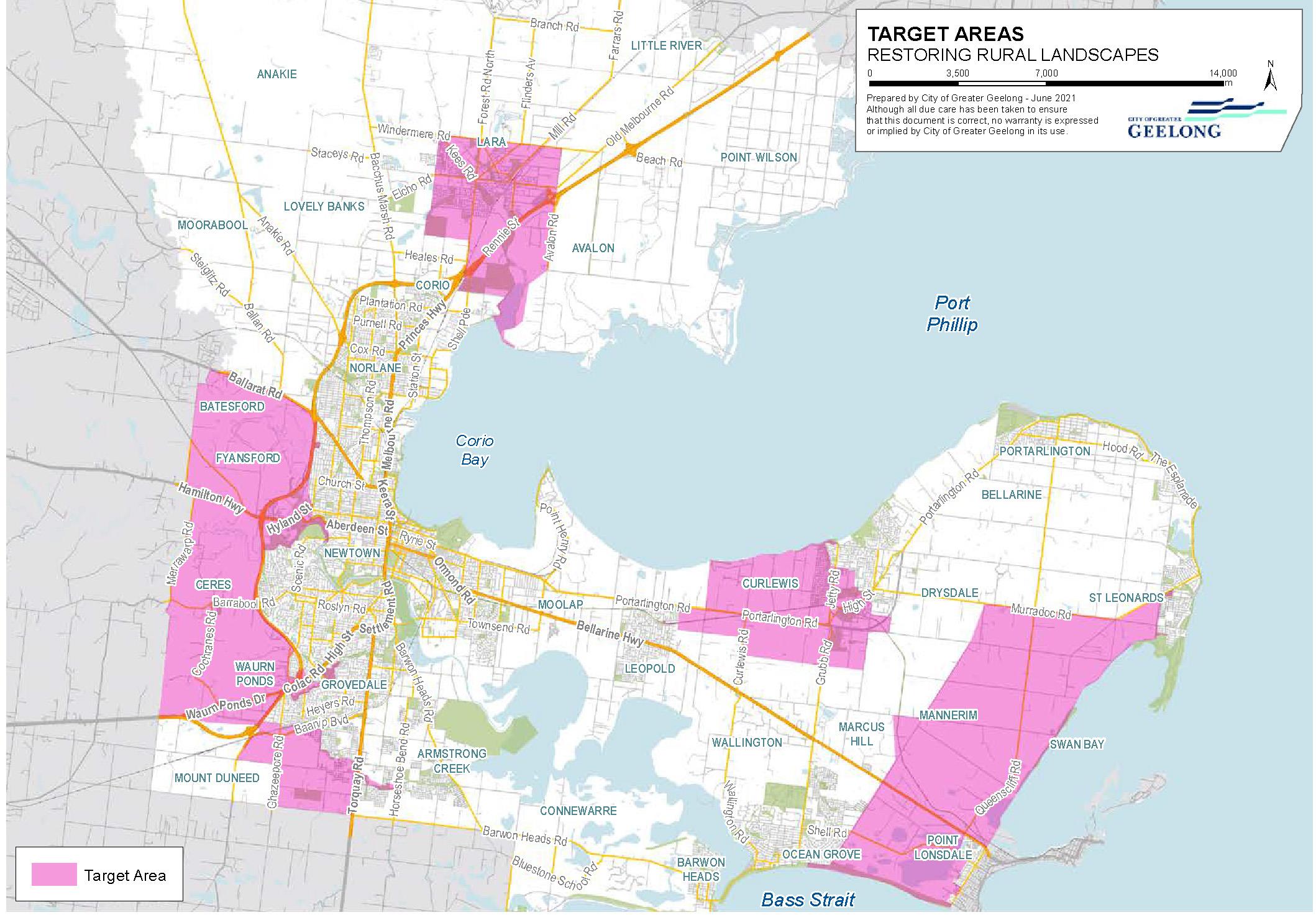
Figure 4: Phase one target areas for the Restoring Rural Landscapes Program
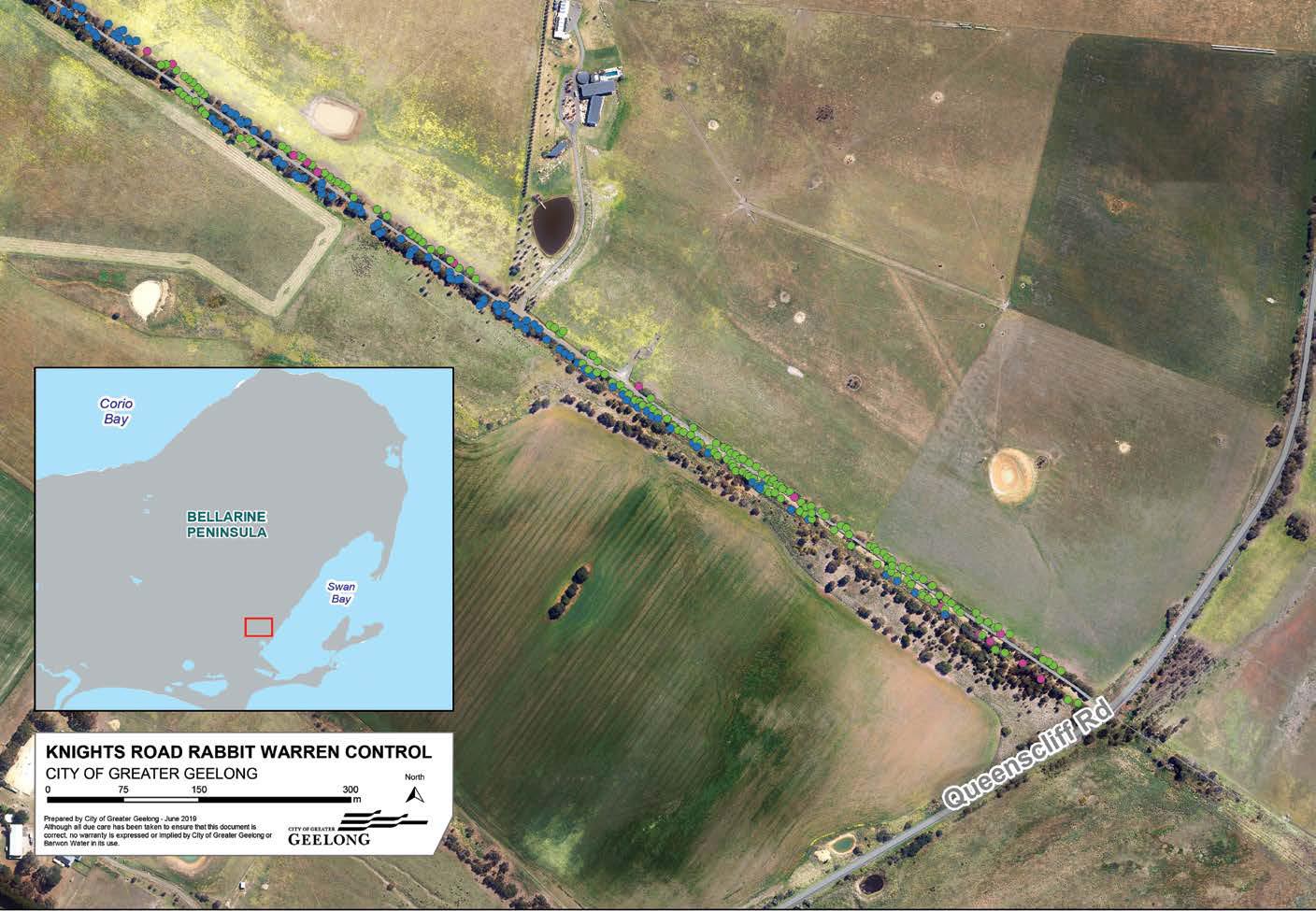
Figure 5: Each coloured dot represents a warren system located on the Knights Road roadside (2019)
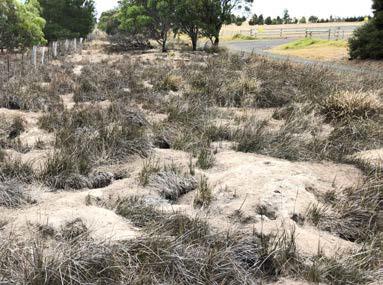
Figure 6: Severe rabbit damage to native vegetation on Knights raod, Mannerim.
Page last updated: