Mosquitoes breed in standing or 'stagnant' water. The many coastal salt marsh wetlands near Geelong are ideal breeding sites for mosquitoes.
Mosquito management - township breeding sites
These areas are monitored regularly for mosquito breeding:
- The protected salt marsh wetlands on the Bellarine Peninsula, including Swan Bay, Lake Connewarre and Breamlea wetlands
- Reedy Lake and Limeburners Lagoon
- Other known freshwater wetlands, constructed wetlands, drains and easements
Breeding sites can appear anywhere after heavy rain or large tides. Our monitoring includes additional sites after these extreme weather events.
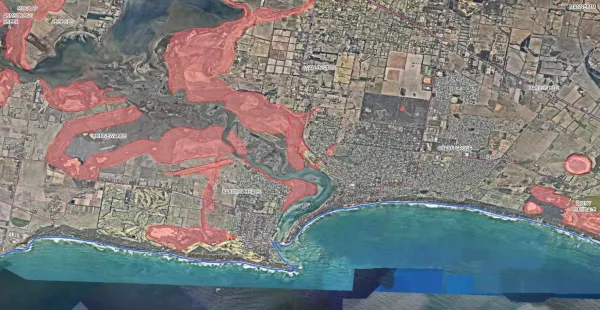
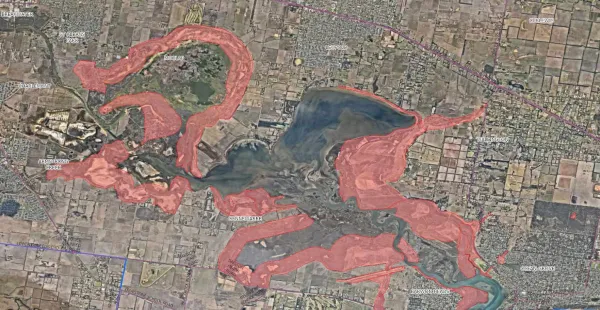
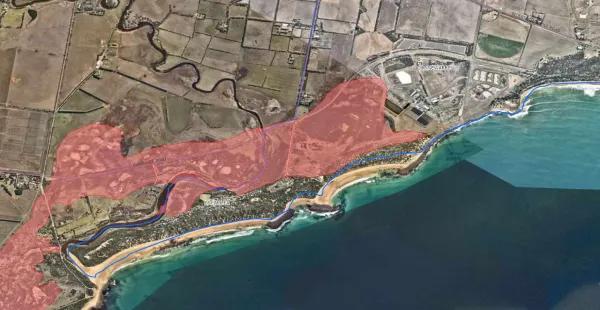
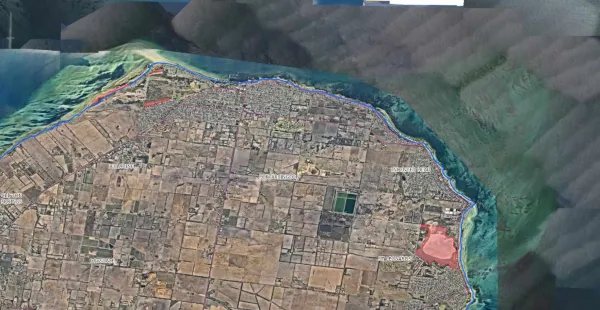
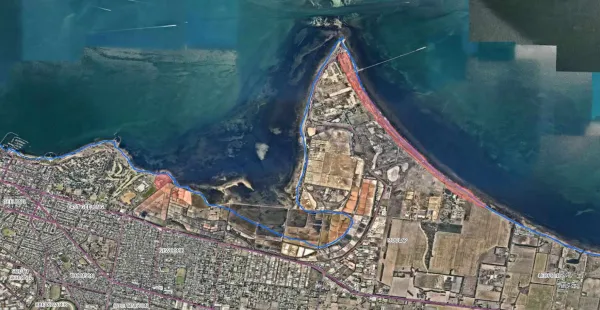
The areas shaded in pink/red on these maps represent some mosquito breeding sites around our townships. We do ground and aerial based monitoring and treatment in breeding sites in these areas.
Ocean Grove, Wallington and Barwon Heads
The major mosquito breeding sites that affect these townships are in the Lake Connewarre wetlands.
Ocean Grove: around Pacey’s Island off the end of Thacker Street and Wallington Road around Saltwater Ridge off Lings Road and Wallington Road
Wallington: in Lake Connewarre off Lings Road and Wallington Road
Barwon Heads: around Lake Murtnagurt off Thirteenth Beach Road, behind the Barwon Heads Golf Course, the Barwon Heads Levy bank, parts of Lake Connewarre off Staceys Road
Moolap, Armstrong Creek and Connewarre
The mosquito breeding sites that affect these townships are the Lake Connewarre and Reedy Lake wetlands.
Leopold: around Reedy Lake off the end of Fitzgerald Road and O’Halloran Road
Moolap: in Lake Connewarre wetlands
Connewarre: around the periphery of Reedy Lake near Stacey Road
Breamlea
Breamlea wetlands are the major mosquito breeding sites that affect this area.
Breamlea: the wetland off Breamlea Road and Blackgate Road around Thompson Creek
St Leonards and Portarlington
The major breeding site that affects residents is the Salt Lagoon and some smaller areas in Portarlington
St Leonards: the Salt Lagoon behind The Esplanade
Portarlington: wetland at the end of Hereford Street and the basin along Boat Road
Swan Bay and Queenscliff
The major mosquito breeding sites that affect these townships are the Swan Bay wetlands.
Swan Bay: around the perimeter of Swan Bay wetlands, near off Swan Bay Road Swan Bay Jetty and Knights Road
Queenscliff: along Fellows Road and Mcdonald Road
Point Lonsdale
There are waterways that feed into Lake Victoria and an isolated basin.
Point Lonsdale: South periphery of Lake Victoria, feeder waterways and a wetland along Clows Lane
Lake Murtnaghurt
The lake is surrounded by golf courses and has the potential to impact residents in Barwon Heads.
Lake Murtnaghurt: this wetland changes throughout a season, depending on rainfall. The periphery of the water is the target for treatments, with the waterway and levy bank to the North also requiring treatment.
Point Henry and East Geelong
The major mosquito breeding sites that affect these areas are the Point Henry foreshore wetlands.
Point Henry: off the Point Henry Foreshore at the end of Windmill Road
East Geelong: behind the CSIRO Research centre
Other areas
In addition to the suburbs listed above, monitoring is also conducted re-actively in response to reports of high levels of mosquitoes or potential breeding grounds around council land within Geelong. This can include parks, gardens, drains and estate wetlands.
Page last updated: