This information sheet covers zone 16 in the Geelong region.
Werribee Plains indigenous plants
Zone 16 Consists of fertile clay to clay loam soils with basalt rock usually present. It includes hills, plains and stony rises that are mostly poorly drained. The average rainfall is 40-45 centimetres.
The southern half of this zone was a dry open grassland with few trees and shrubs. Indigenous grasses in this zone consisted mainly of Kangaroo Grass, Wallaby Grass, Spear Grass and Red-leg Grass.
Tussock Grass grasslands occur in the wetter areas and drainage depressions.
Buloke and Grey Box occurred sporadically across the north of the zone with River Red Gum along the watercourses (for example: Lollypop Creek).
River Red Gum and/or Tangled Lignum typically dominate the remaining swamps in this zone that have not been drained.
For a species list for the watercourses and associated escarpments of the Werribee Plains refer to Werribee Plains Rivers and Watercourses.
| Tree species | ||||||
|---|---|---|---|---|---|---|
| Common name | Botanical name | Size (height by width in metres) | 1 | 2 | ||
| Lightwood | Acacia implexa | 5-15 | 4-7 | Y | - | |
| Black Wattle | Acacia mearnsii | 8-25 | 6-10 | X | Y | |
| Golden Wattle | Acacia pycnantha | 3-10 | 2-5 | Y | - | |
| Buloke | Allocasuarina luehmannii | 5-15 | 5-10 | Y | - | |
| Drooping Sheoke | Allocasuarina verticillata | 4-11 | 3-6 | Y | - | |
| Blue Box | Eucalyptus baueriana | 10-20 | 20 | - | YR | |
| River Red Gum | Eucalyptus camaldulensis | 15-35 | 15-35 | - | Y | |
| Grey Box | Eucalyptus microcarpa | 10-25 | 10-15 | Y | - | |
| Shrub species | ||||||
| Gold-dust wattle | Acacia acinacea | 0.5-2.5 | 2-4 | X | - | |
| Hedge Wattle | Acacia paradoxa | 2-4 | 2-5 | Y | - | |
| Silver Banksia | Banksia marginata | 1-10 | 1-5 | X | - | |
| Sweet Bursaria | Bursaria spinosa | 2-6 | 2-3 | Y | - | |
| Shrub Violet | Hymenanthera dentata | 2-4 | 1-2.5 | Y | - | |
| Tangled Lignum | Muehlenbeckia florulenta | 2 | 2 | - | Y | |
| Snowy Mint-bush | Prostanthera nivea | 3 | 2.5 | YU | - | |
| Groundcover and tussock species | ||||||
| Red-leg Grass | Bothriochloa macra | 0.2 | 0.8 | Y | - | |
| Common Everlasting | Chrysocephalum apiculatum | 0.3 | 1-2 | Y | - | |
| Wallaby Grass | Danthonia species | 0.2 | 0.4-1 | Y | Y | |
| Tussock Grass | Poa labillardieri | 0.8 | 0.8 | - | Y | |
| Spear Grass | Stipa species | 0.3 | 1-2 | Y | Y | |
| Kangaroo Grass | Themeda triandra | 0.3 | 0.3 | Y | - | |
| R - riparian | ||||||
| U - uncommon | ||||||
| X - species once occurred in this area | ||||||
| Y - species is present in areas of remnant vegetation | ||||||
1=Well drained slopes / crests; 2=Wetter areas
Further Contacts
- City of Greater Geelong Environment Unit: 03 5272 5272
- Department of Energy, Environment and Climate Action: 136 186
- Geelong Field Naturalists Club Inc
- Geelong Landcare Network
- Corangamite Catchment Management Authority: 03 5232 9100
Acknowledgements: David Perry DSE and Mark Trengove
This information sheet is also available in PDF format.
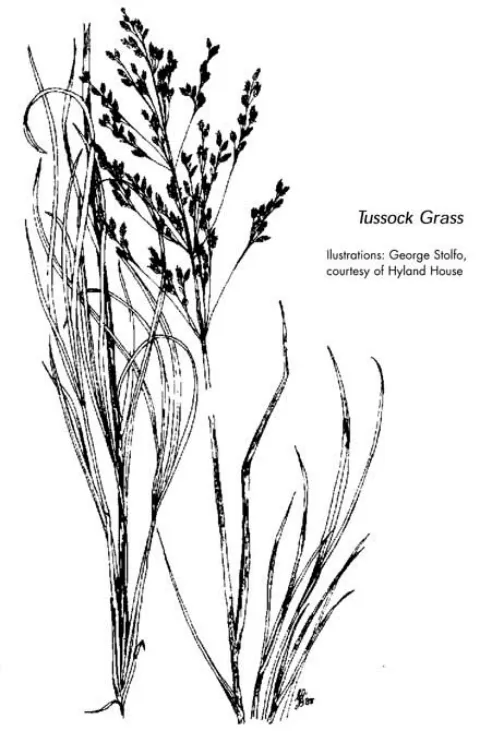
Poa labillardierei 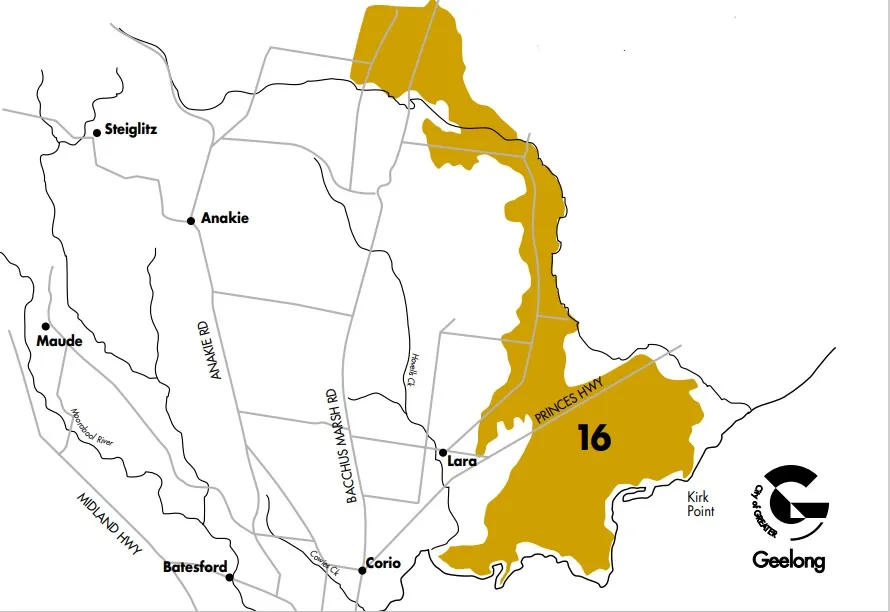
Zone 16 Werribee plains
Click on an image to view details and enlarge
Page last updated: